


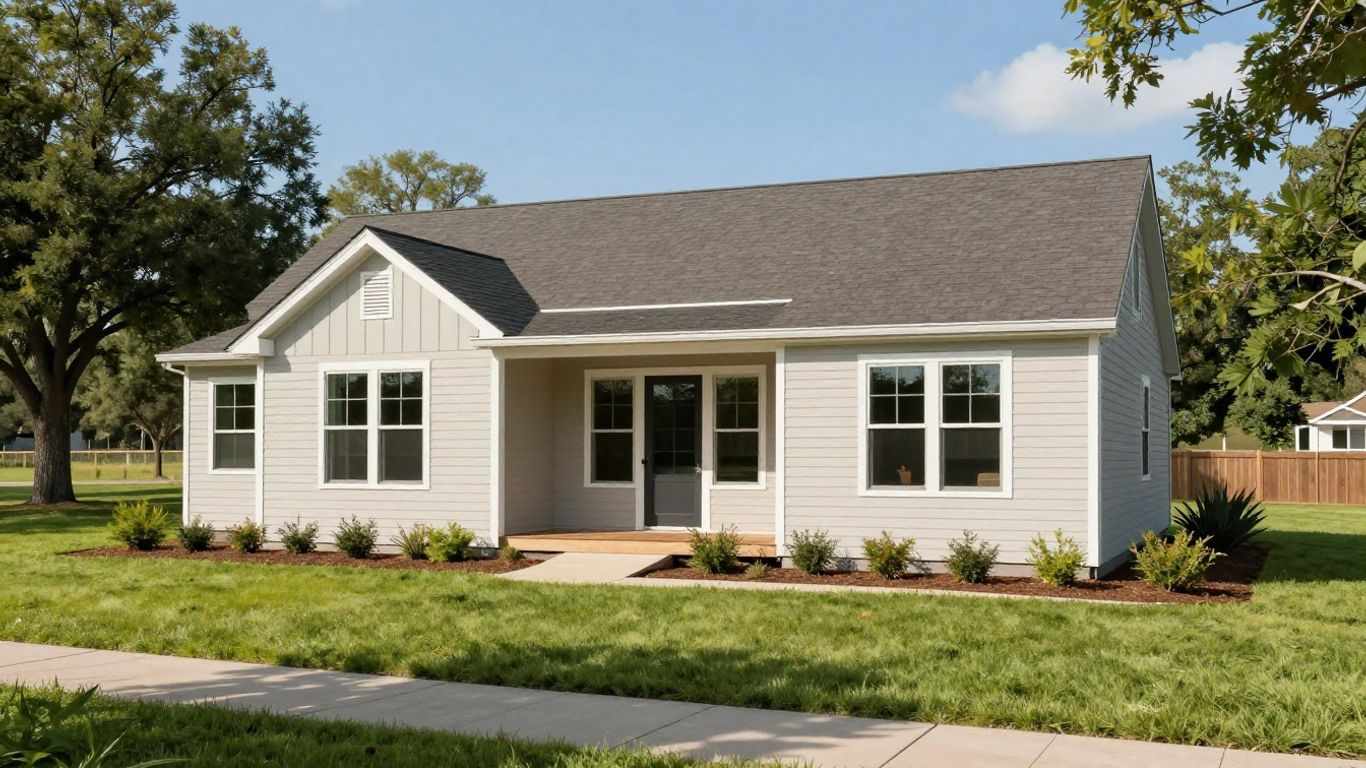
Veterans and active-duty service members in Texas can use a VA-backed loan to buy or build a modular home when the property meets VA, lender, local code, appraisal, and primary-residence requirements. The key is proving that the home is real property, permanently installed on approved land, and built to the same local or state building standards as a site-built house.
Because modular homes are often confused with manufactured homes, buyers should confirm the property type before signing a contract. This guide explains the rules, documents, financing steps, risks, and lender questions you should review before moving forward.
Quick Answer: Can You Use a VA Loan for a Modular Home in Texas?
Yes, eligible borrowers can use a VA-backed purchase or construction pathway for a modular home in Texas if the home will be the borrower’s primary residence, the borrower qualifies for a COE, the lender approves the credit and income profile, and the completed property meets VA and local standards. The home must be installed as real estate, not treated as a movable unit or temporary structure.
The biggest issue is classification. A modular home should be documented as modular or industrialized housing built to applicable building codes, while a manufactured home follows separate HUD-code rules and may face more lender restrictions. Before you make an offer, ask the lender whether they finance modular homes, whether construction-to-permanent financing is available, and which foundation, appraisal, and builder documents they require.
Understanding VA Loans in Texas
A VA-backed home loan is a mortgage made by a private lender and guaranteed in part by the Department of Veterans Affairs. For eligible veterans, service members, and some surviving spouses, this backing can make homeownership more accessible by reducing common barriers such as large down payments and monthly private mortgage insurance. In Texas, this can be especially useful because land, new construction, property taxes, insurance, and local utility districts can significantly affect the final monthly payment.
However, a VA loan is still a real mortgage. You must meet VA and lender standards for credit, income, occupancy, residual income, property condition, and appraisal value. Modular buyers should also remember that construction and installation timelines can add extra documentation, so early pre-approval is more important than waiting until the home is already being built.
To better understand how the program works, review the VA loan eligibility requirements and learn more about the benefits of VA home loans before beginning your home search.
Best First Steps for Texas Borrowers
- Request or confirm your VA Certificate of Eligibility before you start serious home shopping.
- Ask your lender directly whether they finance modular homes, new modular construction, or only completed modular homes.
- Confirm whether the home will be titled and taxed as real property once installed.
- Review the land, zoning, flood zone, utilities, foundation plan, and builder contract before paying large non-refundable deposits.
- Get a written list of lender-required documents for the modular manufacturer, installer, foundation contractor, and local permitting office.
These steps prevent the most common problem: discovering too late that the property, builder, land, or loan structure does not match the lender’s VA program. Modular home transactions require stronger coordination than a standard resale home purchase because the land, factory-built modules, transportation, site work, foundation, utilities, and final inspection all need to align.
A Texas VA loan specialist can also help you compare a completed modular home purchase against a new modular construction path. Both may be possible, but the documentation and timing are different. The earlier you clarify the path, the easier it is to avoid appraisal delays, closing delays, or unexpected out-of-pocket costs.
Modular buyers should also remember that construction and installation timelines can add extra documentation, so early pre-approval is more important than waiting until the home is already being built. You can also review how to apply for a VA home loan before starting the financing process.
You can also review the VA mortgage documents checklist to prepare your paperwork in advance.
What Is a Modular Home?
A modular home is built in sections inside a factory and then transported to a permanent home site for assembly. Unlike a traditional site-built house, much of the construction happens in a controlled environment before the home reaches the land. Once installed on a permanent foundation and completed with utilities and local inspections, a modular home can look and function like a conventional single-family home.
The most important thing for VA financing is that the finished property should be acceptable as permanent residential real estate. This usually means it must sit on a permanent foundation, comply with applicable building codes, pass required inspections, and meet the lender’s appraisal and title requirements. If the home is classified incorrectly, the loan can become much harder to approve.
If you’re planning to build rather than buy, learning more about VA-approved builders can help you choose professionals familiar with VA construction requirements.
How to Tell the Difference Before You Apply
- Check the building code: modular homes are generally built to state or local building codes, while manufactured homes are built to federal HUD standards.
- Check the title treatment: VA lenders usually want the home and land treated as real estate, not as a movable personal property item.
- Check the foundation: the home should be permanently affixed and supported by a code-compliant foundation.
- Check lender language: some lenders use “factory-built,” “industrialized,” “manufactured,” and “modular” differently, so ask for written confirmation.
- Check local placement rules: zoning, subdivision restrictions, HOA rules, flood requirements, and utility availability can affect whether the home can be placed on the land.
This distinction is not just a technical detail. A lender may be comfortable with a modular home that meets site-built code standards but may have stricter rules for a manufactured home. Appraisers also need to understand what they are valuing so they can use appropriate comparable sales and confirm the home’s acceptability under the loan program.
For Texas buyers, modular housing is often connected to industrialized housing rules and local installation requirements. You should confirm whether the manufacturer, builder, and installer have the approvals or registrations needed for your city or county. This is especially important outside major metro areas where land may appear flexible but still has utility, floodplain, driveway, septic, and permitting rules.
Summary table after the buyer checks the building code, title status, foundation, lender terminology, and local placement rules.
| Home Type | How It Is Built | Code Standard | VA Financing Consideration |
| Modular home | Factory-built sections assembled on a permanent site foundation. | State/local building codes or approved industrialized housing code path. | Can be treated much like a site-built home if documented, permanently installed, and appraised properly. |
| Manufactured home | Factory-built on a permanent chassis and transported to the site. | Federal HUD manufactured housing standards. | May be eligible, but usually has separate property, title, size, foundation, and lender requirements. |
| Site-built home | Built almost entirely on the home site. | Local building codes and inspections. | Most familiar property type for VA lenders and appraisers. |
| Mobile home/RV/tiny movable unit | Designed for mobility or temporary use. | Varies; may not meet permanent housing rules. | Often difficult or ineligible unless it meets the correct permanent residential property requirements. |
VA Loan Eligibility Requirements for Modular Homes in Texas
The borrower side of eligibility starts with service history, duty status, discharge character, and a Certificate of Eligibility. The property side is separate. Even if you qualify for a VA loan benefit, the modular home must still satisfy lender, appraisal, title, occupancy, and property-condition rules. That is why a COE should be treated as the starting point, not the final approval.
Before applying, review the complete VA loan eligibility requirements to understand both borrower and property qualifications.
Texas modular home buyers should also account for local costs that affect approval. Property taxes, homeowners insurance, flood insurance, HOA dues, Municipal Utility District assessments, site preparation, and utility connections can all change the final monthly payment. A lender will evaluate your debt-to-income ratio and residual income after the full proposed housing payment is estimated.
A lender will evaluate your debt-to-income ratio and residual income after the full proposed housing payment is estimated. Using a VA mortgage calculator and BAH calculator can help estimate affordability.
Simple Eligibility Checklist Before You Shop
- You have or can obtain a valid COE based on qualifying service or eligible surviving-spouse status.
- You plan to occupy the modular home as your primary residence within the required timeframe.
- Your lender offers a VA product that fits modular purchases or modular construction.
- The home will be permanently attached to land and treated as real property.
- The home, foundation, utilities, and site improvements can pass appraisal, inspections, and local code requirements.
- Your income, credit, residual income, and DTI support the full mortgage payment after taxes, insurance, and other local expenses.
The checklist helps you avoid applying for the right loan on the wrong property. A strong borrower profile cannot fix a home that does not meet property standards, and a well-built modular home cannot close if the borrower does not meet lender requirements. Both sides of the file must work together.
If any item is uncertain, resolve it before ordering the home or buying land. Land contracts, transportation deposits, and factory build deposits may be difficult to unwind if the loan later stalls. A short lender review at the start can save weeks of delays and thousands of dollars in preventable costs.
| Requirement Area | What It Means | Why It Matters |
| COE and service eligibility | The borrower must prove eligibility for the VA home loan benefit. | The lender cannot use VA backing without confirming benefit eligibility. |
| Primary residence | The borrower must intend to occupy the home as a principal residence. | VA loans are not designed for investment-only modular projects. |
| Real-property status | The home and land should be treated as real estate after installation. | Movable personal property treatment can create title and loan issues. |
| Permanent foundation | The structure must be anchored to a compliant, permanent foundation. | This supports safety, value, insurability, and appraisal acceptability. |
| Local code and permits | Texas city, county, utility, flood, and subdivision rules may apply. | A code issue can delay the certificate of occupancy or loan closing. |
| Lender approval | Credit, income, DTI, residual income, documents, and appraisal must satisfy the lender. | VA eligibility does not override underwriting or appraisal requirements. |
Texas-Specific Modular Home Rules and Local Considerations
Texas has a large market for factory-built housing, but the rules are not the same in every county, city, subdivision, or utility district. Modular or industrialized homes must follow the applicable building-code path, and on-site work still needs local approvals. Even when the factory-built module is approved, site-specific work like foundations, driveways, septic systems, utility connections, drainage, and inspections can affect the final approval timeline.
Buyers should not assume that rural land is automatically ready for a VA-financed modular home. Land may need a survey, legal access, flood-zone review, soil or septic evaluation, utility availability check, and local permit review. These items affect not only construction but also the appraiser’s view of marketability and the lender’s comfort with the collateral.
If you’re still searching for land or a community, exploring the best neighborhoods in Texas may help narrow your options.
Texas Planning Points to Confirm Early
- County or city placement rules for modular or industrialized housing.
- Subdivision deed restrictions, HOA design rules, and minimum square footage rules.
- Flood zone status and whether flood insurance will be required.
- Well, septic, electric, water, driveway, and utility connection feasibility.
- Foundation design and whether engineering documentation is required.
- Property tax estimates, MUD/PID assessments, insurance quotes, and local hazard risks.
These items are not just “nice to know.” They can affect the loan amount, monthly payment, appraisal value, insurability, occupancy timing, and final certificate of occupancy. A property that looks affordable on paper may become too expensive if utility extensions, flood insurance, or site preparation costs are underestimated.
For a smoother file, ask the builder and lender to review the same set of plans, land documents, and cost estimates. This creates a more accurate approval picture and helps prevent gaps between what the factory can build, what the site can support, and what the lender can finance.
| Texas Item | Question to Ask | Risk if Ignored |
| Zoning and placement | Can a modular home be placed on this specific lot? | Permit denial, redesign, or inability to use the property. |
| Flood zone | Is the property in a flood hazard area? | Higher insurance costs, appraisal issues, or lender delays. |
| Utilities | Are water, septic/sewer, electric, and access available? | Unexpected connection costs or delayed occupancy. |
| Foundation plan | Has the foundation been designed for the site and home? | Inspection failure, structural concerns, or loan delays. |
| Taxes and assessments | What will property taxes, MUD/PID fees, or HOA dues add to the payment? | Higher monthly cost and possible underwriting pressure. |
| Builder documentation | Can the builder provide plans, contract, insurance, and required registrations? | Incomplete file, delayed appraisal, or lender denial. |
Step-by-Step Process: Using a VA Loan for a Modular Home in Texas
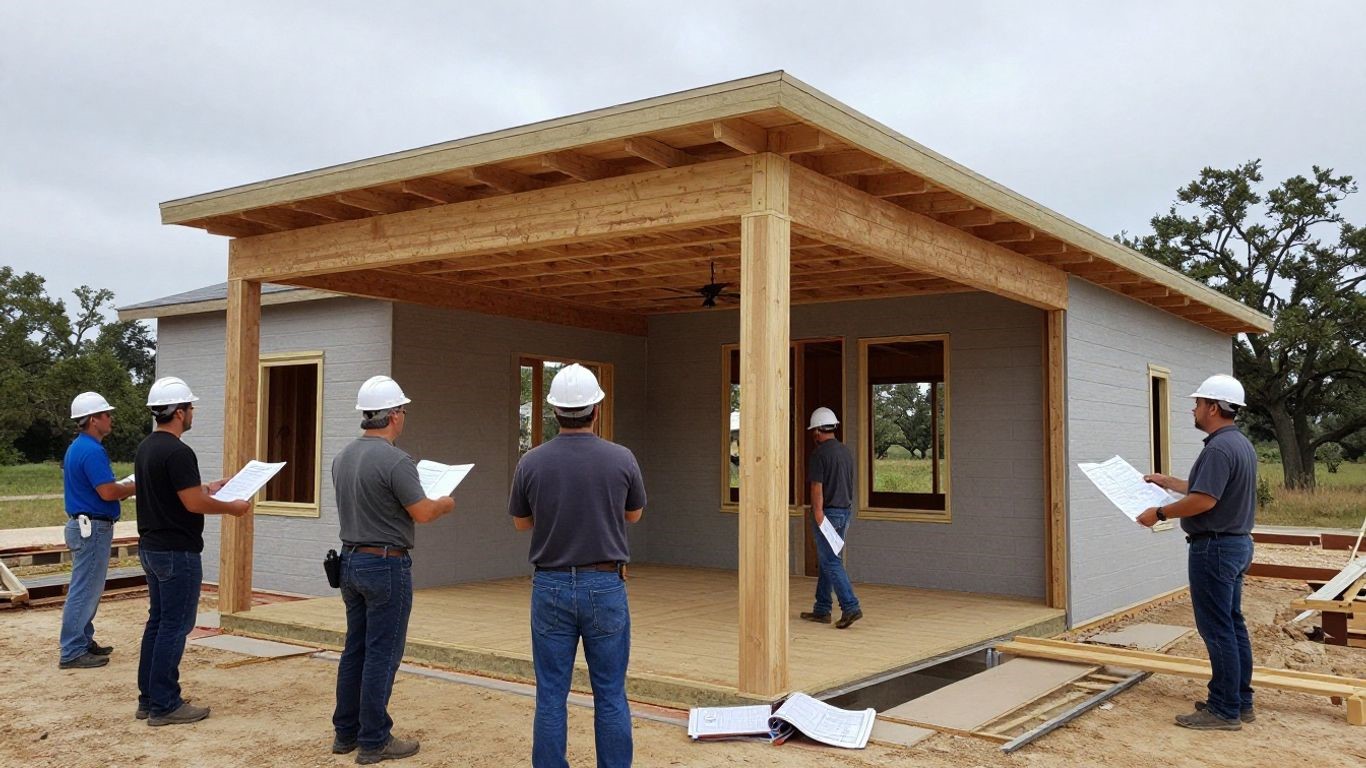
A modular home purchase or build is easiest when you treat it as a coordinated project instead of a normal home purchase. The lender, builder, land seller, title company, appraiser, insurance agent, and local permitting office all need consistent information. If one party is working from outdated plans or unclear cost estimates, the file can stall.
The process below is designed for a Texas veteran or service member who wants to avoid common surprises. The exact order can vary depending on whether you are buying a completed modular home, ordering a new modular build, or combining land and construction into one financing package.
Simple Step-by-Step Path
- Confirm your COE and VA loan eligibility with a VA-experienced lender.
- Ask whether the lender finances completed modular homes, modular construction, or construction-to-permanent loans.
- Confirm whether your land is acceptable, buildable, insurable, accessible, and properly zoned.
- Choose a builder or modular manufacturer with experience providing lender-ready plans and contracts.
- Collect the construction contract, plans, specifications, foundation details, cost breakdown, and timeline.
- Get pre-approved using the full estimated payment, including taxes, insurance, land costs, HOA or MUD dues, and construction-related items.
- Order appraisal and inspections through the lender once the required documents are ready.
- Close the loan or construction phase according to the lender’s program structure.
- Complete installation, utilities, inspections, and local occupancy requirements.
- Move in once the lender, title company, and local authorities have completed the required closing and occupancy steps.
The most important step is not the last one; it is the early lender conversation. Many modular home problems happen because the buyer signs a land contract or builder agreement before confirming whether the lender can finance the full project. A short pre-review can identify whether the home is modular, manufactured, or another property type before money is at risk.
For construction scenarios, ask whether the lender uses draw schedules, inspections, builder approval, interest-only payments during construction, or a one-time-close structure. These details affect cash flow and timing. If the lender only finances completed homes, you may need a different path or a builder-funded project that converts to permanent VA financing after completion.
| Step | Main Goal | Document or Proof Usually Needed |
| 1. COE review | Confirm VA loan benefit eligibility. | COE, DD214, statement of service, or surviving spouse documentation. |
| 2. Loan path review | Determine whether the lender supports the modular scenario. | Loan estimate, lender product requirements, modular/construction policy. |
| 3. Land review | Confirm the site can legally and practically support the home. | Survey, deed/contract, zoning notes, flood map, utility information. |
| 4. Builder package | Prove the home can be built and installed correctly. | Plans, specs, contract, timeline, insurance, foundation details. |
| 5. Underwriting/appraisal | Verify borrower strength and property value. | Income, credit, assets, appraisal, inspection, title, insurance. |
| 6. Final completion | Confirm the home is complete, safe, and ready for occupancy. | Final inspection, certificate of occupancy, completion documents. |
Benefits of Using a VA Loan for a Modular Home
A modular home can give Texas buyers a practical middle ground between a traditional site-built home and a manufactured home. Many buyers like the controlled factory build process, shorter construction timeline, energy-efficient design options, and ability to place a home in areas where existing inventory is limited. When paired with VA financing, the result can be a strong path to long-term homeownership.
The VA loan benefit may help reduce upfront costs because qualified borrowers often do not need a down payment when the appraised value supports the price. VA-backed loans also do not require monthly private mortgage insurance, which can help with monthly affordability. These benefits can be especially useful when the buyer needs to preserve cash for inspections, moving expenses, reserves, utility setup, or property improvements.
If you’re comparing financing options, understanding the benefits of VA home loans can help you decide whether this program fits your goals.
Most Useful Benefits for Texas Modular Buyers
- Potential no-down-payment financing when the sales price does not exceed appraised value and lender requirements are met.
- No monthly private mortgage insurance requirement on VA-backed loans.
- Ability to buy or build a primary residence using a benefit tied to military service.
- Opportunity to consider modern modular designs in markets with limited resale inventory.
- Possible VA funding fee exemption for eligible borrowers receiving service-connected disability compensation.
- Potentially smoother budgeting when working with a lender that understands Texas taxes, insurance, and residual income requirements.
These advantages are strongest when the property is documented correctly from the beginning. If the appraiser, lender, and builder all agree on the classification and scope of the project, the file is easier to review. If the home type is unclear, the lender may apply manufactured-home rules or ask for more documentation, which can extend the timeline.
| Benefit | How It Helps | Important Reminder |
| Lower upfront barrier | Many VA buyers can purchase with no down payment when value supports the price. | Closing costs, inspections, reserves, and appraisal gaps may still require cash. |
| No monthly PMI | Removes a common monthly cost found in many low-down-payment conventional loans. | Other costs like taxes, insurance, HOA, and MUD dues still matter. |
| Flexible property path | VA purchase loans can support buying, building, or improving a home when requirements are met. | Lender participation and documentation are crucial for construction scenarios. |
| Modular efficiency | Factory-built components can reduce weather exposure and improve timeline predictability. | Site work, permits, foundation, and utilities can still cause delays. |
| Disability-related fee benefit | Some borrowers may be exempt from the VA funding fee. | The lender should verify exemption status before closing. |
Potential Challenges and How to Avoid Them
Modular homes can be a great fit, but they are not automatically simple. The most common challenges are lender availability, land readiness, appraisal support, manufactured-home confusion, foundation documentation, and local inspection timing. These issues are manageable when they are identified early and assigned to the right professional.
The biggest risk is assuming that “VA eligible” means every lender will approve every modular structure. VA sets program rules, but private lenders decide which loan products they offer and how they manage overlays, construction risk, appraisals, and builder documentation. Borrowers should ask direct questions before signing contracts.
Working with an experienced lender can reduce these issues. Here’s what to consider when selecting the best VA mortgage lender.
Common Problem Areas to Review
- The lender does not offer modular construction financing or one-time-close construction loans.
- The property is actually manufactured housing but was marketed as modular.
- The land has access, utility, flood, zoning, septic, or deed-restriction problems.
- The appraiser cannot find strong comparable modular or site-built sales.
- The builder contract lacks lender-required details such as specifications, draw schedule, or completion timeline.
- The foundation plan does not satisfy local, lender, or appraisal expectations.
- The borrower underestimates taxes, insurance, HOA, MUD, or site-work costs.
The best way to prevent these problems is to gather the full file before the appraisal is ordered. The lender should have the land information, builder contract, floor plan, specifications, foundation design, permit status, estimated tax and insurance figures, and a realistic timeline. This reduces rework and gives the appraiser better information.
Borrowers should also avoid large deposits until lender comfort is confirmed. Some manufacturers require production deposits or design deposits that may not be refundable. Before paying, ask the lender whether the specific project can be financed and whether the payment schedule matches the loan structure.
| Challenge | Why It Happens | How to Reduce the Risk |
| Lender confusion | Some lenders do not finance modular construction or confuse modular with manufactured housing. | Use a VA lender that has experience with modular or construction files. |
| Land issues | The lot may lack utilities, access, permits, or acceptable zoning. | Review land documents before signing or ordering the home. |
| Appraisal concerns | The appraiser may need support for value, condition, and comparable sales. | Provide plans, specs, contract, and local comparable information early. |
| Foundation delays | Permanent foundation documentation may be incomplete. | Get foundation design and local inspection requirements in writing. |
| Cost overruns | Site prep, utility connections, taxes, insurance, and delays can raise costs. | Build a contingency and verify the full monthly payment before approval. |
| Contract gaps | Builder documents may not match lender requirements. | Ask the lender for its required builder package before signing. |
Documents You May Need for a VA Modular Home Loan
Documentation is the difference between a clean approval and a stressful delay. A completed modular home may require fewer documents than a new modular construction project, but both need clear proof that the property is acceptable and the borrower can afford the loan. Lenders may also ask for extra items based on their overlays or the project’s complexity.
Start building your file early. If you are still comparing builders, ask each one whether they can provide lender-ready plans, specifications, proof of insurance, installation details, and a realistic completion timeline. Builders who understand financing requirements usually make the process easier for veterans.
To stay organized, use this VA mortgage documents checklist before submitting your application.
Simple Document Checklist
- COE and service documentation, such as DD214 or statement of service.
- Income documents, asset statements, credit authorization, and identification.
- Land contract, deed, survey, legal description, and title information.
- Modular home contract, floor plan, specifications, upgrades, and total cost breakdown.
- Foundation plan, engineering details if required, and installation information.
- Builder or manufacturer information, insurance, warranties, and required local registrations.
- Permit status, utility details, flood-zone information, and insurance quote.
- Appraisal, inspection reports, completion documents, and certificate of occupancy when applicable.
Every lender will not ask for every item on this list, but having them organized can speed up the file. Missing documentation often creates the impression that the project is risky, even when the home itself is perfectly acceptable. Organized buyers are easier to approve because the lender can verify the facts quickly.
For new construction or modular installation, timing also matters. The lender may need some items before appraisal, some before closing, and some before final disbursement or occupancy. Ask for a document timeline so you know what must be submitted at each stage.
| Document Type | Who Usually Provides It | Best Time to Gather It |
| COE and service records | Borrower, VA, or lender through approved systems. | Before pre-approval. |
| Land documents | Seller, title company, surveyor, or county records. | Before land contract or appraisal. |
| Plans and specifications | Modular manufacturer or builder. | Before underwriting and appraisal. |
| Foundation details | Builder, engineer, installer, or local authority. | Before site work and appraisal review. |
| Insurance and tax estimates | Insurance agent, county, lender, or title company. | Before final payment approval. |
| Final inspection or occupancy proof | Local authority, builder, or inspector. | Before final completion or move-in. |
Conclusion: Is a VA Loan for a Modular Home in Texas Worth It?
A VA loan can be a strong option for a modular home in Texas when the borrower, property, builder, land, and lender requirements all line up. The advantages can be meaningful: possible no-down-payment financing, no monthly PMI, flexible primary-residence options, and access to modern factory-built construction. The key is making sure the home is documented as permanent real property and meets the correct building, foundation, appraisal, and occupancy standards.
The safest path is to confirm eligibility before signing land or builder contracts. Get your COE, speak with a VA-experienced lender, verify the property classification, review Texas local rules, and collect all builder and foundation documentation early. With the right guidance, a modular home can be a practical and affordable way for Texas veterans and military families to build long-term housing stability.
If you’re ready to move forward, you can get a personalized VA loan quote or contact a Texas VA loan specialist to discuss your modular home project.
Frequently Asked Questions
Can you use a VA loan for a modular home in Texas?
Yes, an eligible borrower may use a VA-backed loan for a modular home when the property meets VA, lender, appraisal, title, code, and occupancy requirements. The home must be treated as permanent real property, not a temporary or movable structure.
Is a modular home the same as a manufactured home?
No. Modular homes are generally built in factory sections to state or local building codes and then assembled on a permanent foundation. Manufactured homes are built to federal HUD standards and follow separate VA and lender requirements.
Does the VA require a permanent foundation?
For a modular home to be acceptable as permanent residential real estate, the foundation must satisfy local code, lender, and appraisal expectations. Foundation documentation is one of the most important items to confirm before closing.
Can I buy land and a modular home with one VA loan?
It may be possible through certain purchase or construction-to-permanent structures, but not every lender offers this path. The land, home, contract, appraisal, and occupancy plan must fit the lender’s VA program.
Do I need a VA-approved modular home builder?
For most standard scenarios, the safer wording is “VA-experienced” or “lender-reviewed” builder. Some specialized VA programs may have specific registration requirements, but standard builder claims should be verified with the lender.
Does a COE guarantee approval for a modular home?
No. A COE confirms your VA home loan benefit eligibility. You must still meet lender credit and income standards, and the modular home must meet appraisal, title, foundation, and local code requirements.
Are modular homes harder to appraise?
They can be harder if comparable sales are limited or if the appraiser does not receive clear documentation. Providing plans, specifications, cost breakdowns, and local comparable support can help reduce delays.
What costs should Texas borrowers watch closely?
Property taxes, homeowners insurance, flood insurance, HOA dues, MUD or PID assessments, utility connections, septic or well work, driveway access, permits, and site preparation can all affect affordability.
Can a veteran with a disability avoid the VA funding fee?
Many borrowers receiving VA disability compensation for a service-connected condition may be exempt from the VA funding fee, but exemption status should be verified with the lender before closing.
What is the first step if I want a modular home?
Start by confirming your COE and asking a VA-experienced lender whether they finance your exact modular home scenario. Do this before you buy land, choose a manufacturer, or pay a large deposit.


