




A GI Bill Certificate of Eligibility, often called a VA education COE or education decision letter, confirms the VA education benefit you are approved to use and gives your school the information needed to begin enrollment certification. Texas does not issue a separate federal GI Bill COE, even though people commonly search for a “Texas GI Bill Certificate of Eligibility.”
Veterans, service members, spouses, dependents, and survivors generally apply through VA.gov, then provide the decision letter to the School Certifying Official at an approved Texas school or training program. This guide explains the correct application, forms, processing timeline, Hazlewood Act distinction, and the difference between an education COE and a VA home loan COE.
Quick Answer: How to Get GI Bill Certificate of Eligibility in Texas?
To get a GI Bill Certificate of Eligibility in Texas, apply for the appropriate federal VA education benefit through VA.gov. Veterans and service members commonly use VA Form 22-1990, family members using transferred Post-9/11 benefits use VA Form 22-1990e, and eligible spouses or dependents applying for DEA or the Fry Scholarship use VA Form 22-5490. VA currently reports an average education-claim processing time of about 30 days. If approved, you receive a decision letter, often called a COE, that you may need to give to your school certifying official.
Important Clarification: Is There a Texas GI Bill COE?
There is no separate federal education certificate called the Texas GI Bill Certificate of Eligibility. The document is issued by the U.S. Department of Veterans Affairs after it decides a claim for GI Bill or another qualifying VA education benefit. The word “Texas” describes where the student plans to use the benefit, not the agency that issues the COE.
Texas also administers state-level veteran education programs, especially the Hazlewood Act tuition exemption. That program has its own eligibility rules, database registration, school paperwork, and approval process. A federal GI Bill decision letter may be part of a school document checklist, but it does not itself approve Hazlewood benefits.
What Is a GI Bill Certificate of Eligibility?
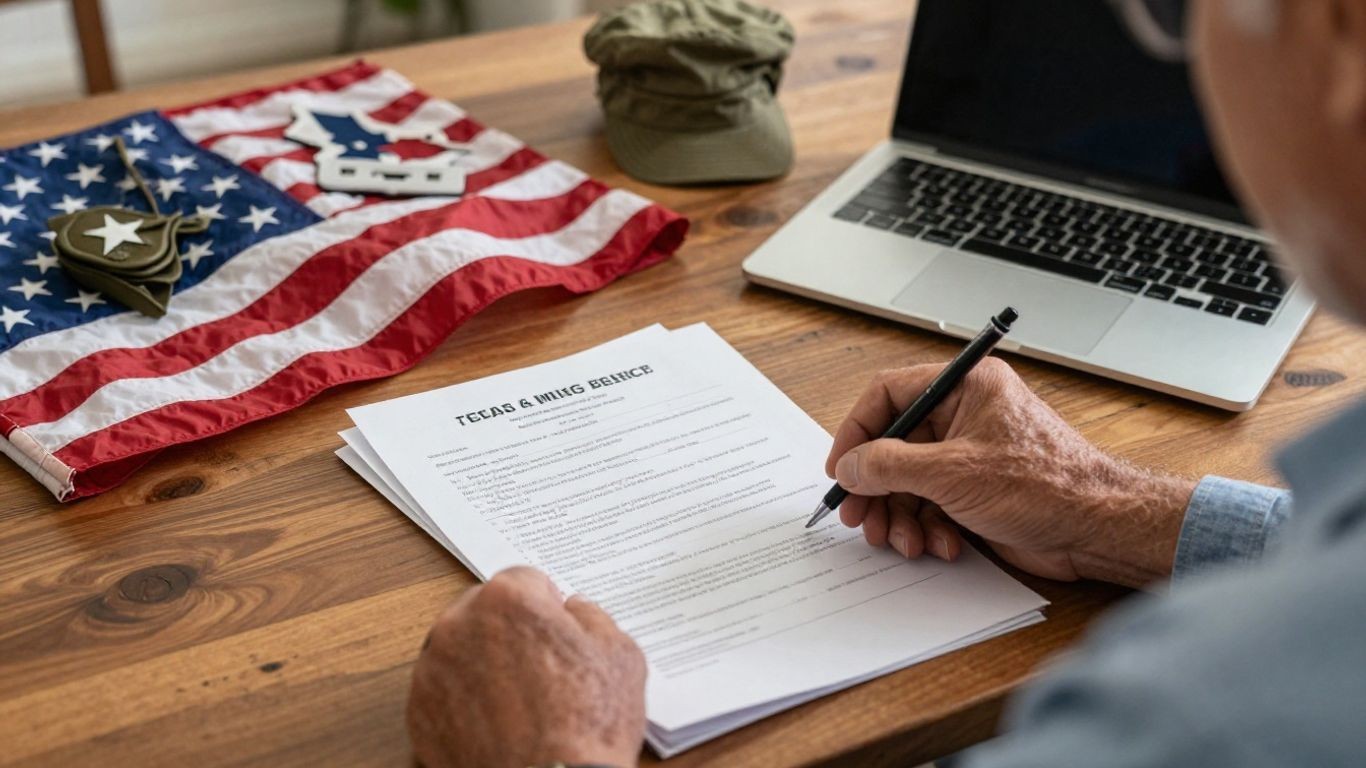 A GI Bill COE is the VA education decision letter issued after VA reviews an application. If the application is approved, the letter confirms the education benefit for which the claimant is eligible and may contain information about the applicable chapter, benefit level, remaining entitlement, or the period in which the benefit can be used.
The COE helps the school understand which VA education program to certify. It is not the same as an admission letter, tuition invoice, financial-aid award, school enrollment certification, or payment guarantee. The student and the school must still complete the remaining steps for the chosen term.
What Information Can Appear on the COE?
The wording varies by benefit and claimant. Review every page and compare names, dates, benefit chapter, and entitlement details with your records before giving the letter to the school.
Approved Education Benefit
The letter may identify the Post-9/11 GI Bill, Montgomery GI Bill, transferred Post-9/11 entitlement, DEA, Fry Scholarship, or another education benefit involved in the decision.
Eligibility Percentage or Benefit Level
For some Post-9/11 GI Bill claimants, the decision may show the percentage of the full benefit rate based on qualifying service and other applicable rules.
Remaining Entitlement
The letter or online Statement of Benefits may show how many months and days of entitlement remain after prior benefit use.
Delimiting or Use-By Information
When a time limit applies, the decision may explain when eligibility ends or which rules control the period of use.
Important Conditions and Appeal Rights
The decision can include instructions, limitations, and options for requesting review when the claimant disagrees with the determination.
Which VA Education Programs May Issue a COE?
“GI Bill” is an umbrella term rather than a single benefit. The correct chapter depends on the applicant, military service, prior benefit elections, transfer status, and survivor or dependent eligibility.
Post-9/11 GI Bill, Chapter 33. For eligible service after September 10, 2001. Depending on the claim, it may help with tuition and fees, housing, books, or approved training costs.
Montgomery GI Bill Active Duty, Chapter 30. For qualifying veterans and service members who meet the program rules and elected or contributed to the benefit.
Montgomery GI Bill Selected Reserve, Chapter 1606. For qualifying members of the Selected Reserve who meet service and program requirements.
Transferred Post-9/11 GI Bill benefits. For a spouse or child after the Department of Defense has approved the service member’s transfer of entitlement.
Survivors’ and Dependents’ Educational Assistance, Chapter 35. For qualifying spouses and dependents of veterans or service members who meet the statutory disability, death, capture, detention, or missing-status requirements.
Fry Scholarship. For qualifying children and surviving spouses of certain service members or Selected Reserve members who died under covered circumstances.
A person may appear to qualify for more than one education program, but benefit elections and combined-entitlement rules can be complex. Use the VA comparison tools or obtain accredited assistance before making an election that may affect future entitlement.
How to Get a GI Bill Certificate of Eligibility in Texas
 The fastest starting point for most applicants is the online VA education-benefits application. The online process asks questions that route the claimant to the appropriate benefit path, while paper forms remain available for applicants who prefer mail or need assistance.
- Confirm which benefit and applicant category apply. Identify whether the claimant is a veteran or service member, a family member using transferred benefits, or a spouse or dependent applying under DEA or the Fry Scholarship.
- Gather service, identity, banking, and education information. Prepare the Social Security number, direct-deposit information, education and military history, and basic information about the intended school or training facility.
- Apply online through VA.gov or submit the correct paper form. Review every answer carefully before submitting. Keep the confirmation number and a copy of the application.
- Continue the school admission process while VA reviews the claim. A student does not need to pause applications, financial-aid planning, or conversations with the school veterans office while waiting for the COE.
- Receive and review the decision letter. VA mails the decision. Some Post-9/11 GI Bill applicants can also download the education decision letter online after a decision is issued.
- Give the required documentation to the school certifying official. The school may also require an internal benefit request form, degree plan, schedule, residency information, or prior transcripts.
Submitting the VA application and registering for school are connected but separate processes. Follow both timelines so a missing admission document or late school certification does not delay the first term.
Which VA Form Should You Use?
Using the wrong form can create avoidable processing questions. The online application usually routes the claimant correctly, but these are the primary forms to recognize.
VA Form 22-1990. Veterans and service members applying for the Post-9/11 GI Bill, Montgomery GI Bill Active Duty, or Montgomery GI Bill Selected Reserve.
VA Form 22-1990e. A spouse or child applying to use Post-9/11 GI Bill benefits that the service member has already transferred through the Department of Defense.
VA Form 22-5490. An eligible spouse or dependent applying for Chapter 35 DEA or the Fry Scholarship.
VA Form 22-1995. A veteran, service member, or dependent requesting a change of program or place of training and, when applicable, an updated COE.
A paper form number does not determine eligibility by itself. VA reviews the service record, transfer status, relationship, prior benefit use, and other evidence before issuing the decision.
Documents and Information to Prepare
VA may be able to verify much of the record electronically, but a clean application is easier to process when names, dates, service periods, and education history are consistent. Keep a digital folder rather than searching for documents after VA requests clarification.
Identity and contact information. Use the legal name that matches VA and military records, a current mailing address, phone number, and email address.
Social Security number and direct-deposit information. Education payments may require verified banking details, even though some payments are made directly to the school.
Military history. Prepare service dates, branch, duty status, discharge information, and details of prior reserve or National Guard service when applicable.
Education history and intended program. Include prior schools, training, degrees, and basic information about the school or program you plan to attend.
Transfer or dependency evidence. A transferred-benefit, DEA, or Fry Scholarship claim may require relationship, transfer, service-member, death, disability, or survivor information.
Prior VA education-benefit use. Report previous entitlement use accurately because it can affect the remaining months and the decision letter.
Do not send original records unless VA specifically requests them. Save the application, uploaded files, confirmation, decision letter, and every message in one folder for future semesters or benefit changes.
How Long Does It Take to Receive a GI Bill COE?
VA currently reports an average education-claim processing time of about 30 days. That is an average, not a guaranteed deadline. A straightforward electronic record can move faster, while missing records, transferred benefits, dependency questions, prior elections, or manual review can extend the timeline.
While waiting, complete admissions, contact the school certifying official, confirm the term certification deadline, and use the GI Bill Comparison Tool to verify that the institution and the specific program are approved. Do not assume a pending application guarantees payment by the tuition due date.
How to Download or Replace Your Education Decision Letter
VA mails a decision letter after it processes the application. Veterans who applied for Post-9/11 GI Bill benefits on VA.gov and received a decision on or after August 20, 2022 may be able to download the education decision letter online.
At present, family members and dependents generally cannot use that online download tool. They, and anyone needing an older or different education letter, can request a copy through Ask VA or contact the GI Bill hotline. Keep both a secure digital copy and a printed copy for school records.
How to Read Your GI Bill COE Before Giving It to the School
A quick review can prevent a wrong benefit chapter or incorrect personal record from moving into the school certification. Read the entire decision, not just the first page.
Confirm the claimant’s name and identifying information. A mismatch between VA, school, and account records can also interfere with access to online statements.
Check the benefit chapter and claimant category. Make sure the letter reflects the program you intended to use and whether the benefit is direct, transferred, dependent, or survivor-based.
Review entitlement and percentage information. Compare remaining entitlement and any applicable benefit percentage with prior use and service history.
Read dates, conditions, and limitations. The letter may explain a use-by date, benefit election, required action, or reason a portion of the claim was not approved.
Use the review instructions when something is wrong. Do not ask the school to reinterpret a VA eligibility decision. Contact VA or use the decision-review process identified in the letter.
The school certifying official can explain the school workflow, but only VA can change the federal eligibility decision or entitlement record.
How to Use Your GI Bill COE at a Texas School
After admission, contact the school office that handles veteran education benefits. Depending on the institution, it may be called the veterans office, military services office, registrar, financial-aid office, or School Certifying Official office.
Submit the COE or decision letter when requested. The school may accept a secure upload, email, portal submission, or in-person copy.
Complete the school’s benefit-request form for the term. Many schools require a new certification request every semester even when the VA eligibility decision has not changed.
Confirm that every class applies to the approved program. Courses outside the degree or training plan may not be certifiable unless an applicable rule permits them.
Ask when the school will submit enrollment to VA. Admission and registration do not automatically tell VA that you are attending.
Report schedule changes immediately. Adding, dropping, withdrawing, changing modality, or changing the program can affect tuition, housing, entitlement, and potential debt.
Complete monthly enrollment verification when required. Post-9/11 GI Bill and certain other participants may need to verify enrollment to continue receiving payments.
Keep written records of the term, certified credit hours, changes, school contacts, and VA messages. This is especially important when tuition and housing payments follow different schedules.
How to Confirm a Texas School or Program Is GI Bill Approved
A school can be accredited yet have a program that is not approved for VA education benefits. Likewise, approval of one campus, degree, license, or training format does not automatically cover every offering.
Search the VA GI Bill Comparison Tool. Use the institution or employer search to review approved programs, benefit estimates, school information, and available caution indicators.
Confirm the exact campus and program. Ask about the facility code, program name, online or in-person format, and whether the specific credential is certifiable.
Speak with the School Certifying Official. The SCO can explain internal forms, certification timing, tuition reporting, and changes that require a new request.
Use Texas Veterans Commission education resources for state approval questions. The Texas State Approving Agency role is separate from the VA eligibility decision shown on the COE.
Make the approval check before paying a nonrefundable deposit or assuming that a private certification, apprenticeship, flight course, or online program will be covered.
GI Bill COE and the Texas Hazlewood Act
The Hazlewood Act is a State of Texas education benefit for qualified veterans, spouses, and dependent children. The Texas Veterans Commission describes it as an exemption of up to 150 credit hours at eligible Texas public institutions, subject to separate statutory and school requirements.
Hazlewood is not a federal GI Bill chapter, and registration in the Hazlewood Database does not by itself confirm eligibility. The school makes the exemption determination using the required state application and supporting documentation. Some schools may request a federal VA education COE, denial letter, or benefit history when evaluating how federal and state benefits interact, so follow the institution’s current checklist.
GI Bill COE vs Hazlewood vs VA Home Loan COE
The term “Certificate of Eligibility” appears in several veteran-benefit contexts. The documents are not interchangeable, and sending the wrong COE can delay a school application or mortgage file.
GI Bill education COE. Federal VA decision letter used for education or training benefits and school enrollment certification.
Hazlewood Act approval. Texas state tuition-exemption determination completed through the school with Texas Veterans Commission requirements.
VA home loan COE. Federal VA housing document showing home loan eligibility and available loan entitlement for a VA-approved lender.
If you are researching the separate mortgage process, VA purchase loans are covered in our guide to VA purchase loans.
| Document or Program | What It Establishes | Primary Use |
| GI Bill education COE | VA decision on an education-benefit claim, including the applicable program and entitlement details. | School or training enrollment certification |
| Texas Hazlewood Act | School determination that the applicant meets the state tuition-exemption requirements. | Eligible Texas public institution tuition exemption |
| VA home loan COE | Eligibility for the VA home loan benefit and available loan entitlement. | VA purchase, refinance, or construction mortgage file |
Common GI Bill COE Mistakes to Avoid
Most delays do not come from the document itself. They come from submitting the wrong application, using an unapproved program, missing a school deadline, or assuming that the COE completes the entire benefit process.
Confusing the education COE with the VA home loan COE. Both are issued by VA, but they support entirely different benefits and are requested through different systems and forms.
Calling Hazlewood the Texas GI Bill. Hazlewood is a separate state exemption. Its approval does not replace a federal GI Bill education decision and vice versa.
Using the veteran’s VA.gov account for a dependent application. A family member applying for transferred benefits should use the family member’s own verified account and correct application.
Waiting until tuition is due to apply. The VA average is about 30 days, and school certification or manual review can add time.
Assuming school admission means the program is VA approved. Confirm the exact program and campus in the GI Bill Comparison Tool and with the school certifying official.
Failing to request certification each term. Many schools require a term-specific internal request even after the student has submitted the COE once.
Ignoring schedule changes. Drops, withdrawals, modality changes, and non-degree courses can affect payments and may create an overpayment debt.
Relying on an old letter after changing programs or benefits. Request an updated decision or change of program when VA or the school requires it.
A simple timeline solves most of these problems: apply to VA, confirm program approval, complete admission, submit the COE, request term certification, and report changes immediately.
If you are dealing with a mortgage instead of education benefits, review the requirements for VA mortgage documents separately.
What to Do If the COE Is Delayed, Missing, or Incorrect
Do not submit a second application immediately unless VA instructs you to do so. Duplicate claims can create confusion. First, check the application status, messages, and whether VA requested evidence.
Delayed beyond the normal window. Confirm that VA received the claim, review any request for evidence, and contact the GI Bill hotline or Ask VA with the confirmation information.
Lost decision letter. Use the online Post-9/11 decision-letter tool when eligible, or request a copy through Ask VA or the GI Bill hotline.
Wrong name, service period, benefit, or entitlement. Follow the correction or decision-review instructions in the letter and provide the records that support the requested change.
Denied claim. Read the reasons and review options carefully. A denial may reflect missing evidence, service requirements, transfer status, discharge information, or the selected benefit.
School cannot certify the program. Ask whether the issue is program approval, degree applicability, facility code, term dates, or missing school documents. The education COE alone cannot make an unapproved program certifiable.
Keep a dated record of every call, online request, uploaded document, and school conversation. This makes it easier to explain the history if a payment or entitlement question appears later.
Final Answer
A Texas student receives a GI Bill Certificate of Eligibility from the federal Department of Veterans Affairs, not from the State of Texas. Apply through VA.gov using the benefit path that matches the claimant, review the education decision letter carefully, and give it to the School Certifying Official at an approved Texas institution when requested.
The COE confirms the VA education-benefit decision, but successful payment also depends on program approval, school certification, remaining entitlement, enrollment status, and timely reporting of changes. Keep the GI Bill COE separate from Hazlewood paperwork and from the VA home loan COE used for a mortgage.
For borrowers who need the separate mortgage benefit, review the requirements for VA home loan eligibility before applying.
Frequently Asked Questions
What is a Texas GI Bill Certificate of Eligibility?
It is the federal VA education decision letter used by a student attending a Texas school. Texas does not issue a separate federal GI Bill COE.
Does a GI Bill COE prove that every class will be paid for?
No. The school and program must be approved, the classes generally must apply to the program, enrollment must be certified, and the payment depends on the benefit rules and remaining entitlement.
Can I apply before choosing a Texas school?
Yes. VA asks for basic school or training information, but applicants can begin the education-benefit process while comparing approved programs.
How long does it take to get the education COE?
VA currently reports an average education-claim processing time of about 30 days. A claim that needs additional evidence or manual review can take longer.
Can I download my GI Bill COE online?
Some veterans who applied for Post-9/11 GI Bill benefits on VA.gov and received a decision on or after August 20, 2022 can download the decision letter online. Dependents and family members generally need to request a copy through VA.
Which form does a veteran use?
Veterans and service members generally use VA Form 22-1990 for the Post-9/11 GI Bill, Montgomery GI Bill Active Duty, or Montgomery GI Bill Selected Reserve.
Which form does a dependent use for transferred benefits?
A spouse or child using Post-9/11 benefits already transferred by the service member generally uses VA Form 22-1990e.
Is the Hazlewood Act the same as the GI Bill?
No. Hazlewood is a Texas state tuition exemption with separate eligibility and school application requirements. The GI Bill is a federal VA education benefit.
Can I use the GI Bill and Hazlewood Act together?
The interaction depends on the student, benefit chapter, remaining federal benefits, school policy, and state rules. Ask the school veterans office to apply the current requirements to the specific term.
What if I change schools or programs?
Submit the required change request through VA. VA Form 22-1995 is used for a change of program or place of training and may lead to an updated COE.
Does the school apply for the COE for me?
No. The claimant applies for the VA education benefit. The school later submits enrollment certification and any required amendments.
Is the GI Bill COE the same document needed for a VA mortgage?
No. A VA mortgage uses a separate home loan Certificate of Eligibility. A VA-approved lender can often retrieve the home loan COE electronically.


