


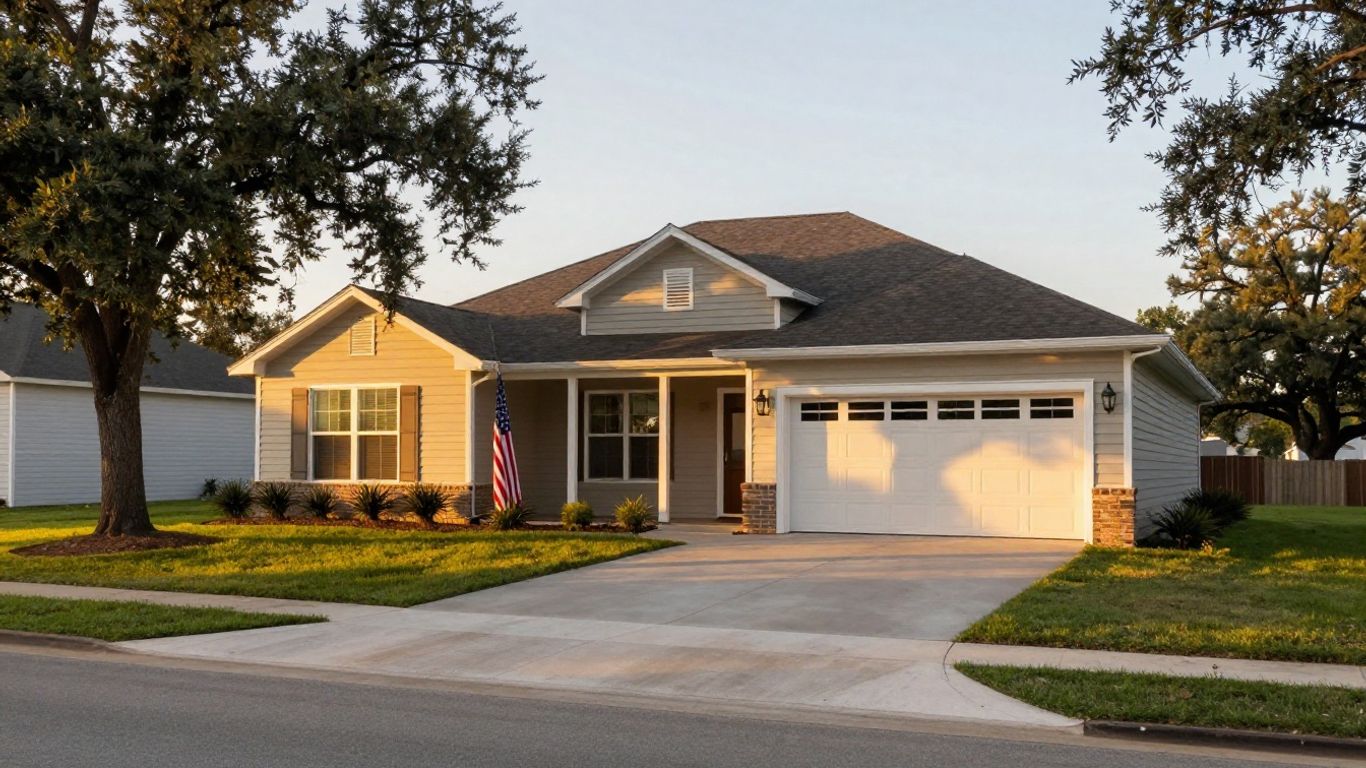
Eligible veterans, active-duty service members, and qualifying surviving spouses can use VA financing for certain manufactured homes in Texas, but the property type has to be identified correctly before the loan is structured. A home built to the federal HUD manufactured-home standards is not the same as a pre-1976 mobile home or a modular home built to state and local building codes.
VA rules can support manufactured-home and lot transactions, while many private mortgage lenders add stricter requirements for permanent attachment, real-property treatment, installation history, and land ownership. The safest approach is to verify the HUD labels, Texas Statement of Ownership, land rights, foundation, utilities, appraisal path, and lender program before you make a non-refundable commitment.
Quick Answer: Can You Use a VA Loan for a Mobile Home in Texas?
Yes, but in most modern mortgage transactions, the property being financed is a HUD-code manufactured home, not an older pre-HUD-code mobile home. VA regulations recognize manufactured-home, lot, and combination transactions, and VA.gov confirms a VA-backed purchase loan can be used to buy a manufactured home or lot. The borrower must qualify for the VA benefit and lender underwriting, the home and site must meet applicable standards, and the lender must actually offer the specific manufactured-housing program you need. Because lender overlays can be stricter than the baseline VA rules, get the property screened before signing a contract.
For more information about the broader purchase process, review the VA home purchase loan options in Texas.
Mobile Home vs Manufactured Home vs Modular Home in Texas
These terms are often used casually, but they describe different legal and construction categories. That distinction matters for VA financing because the governing standards, documentation, appraisal, and lender eligibility can change with the property type.
Start with the date and construction standard, then verify the labels and Texas records. If the home is actually modular, use the separate modular-home financing guidance rather than applying manufactured-home rules to it.
- Mobile home: In modern housing terminology, this usually means a factory-built non-modular home constructed before the federal HUD Code became effective on June 15, 1976. These units generally do not have HUD certification labels and often fall outside standard mortgage eligibility.
- Manufactured home: A factory-built home constructed to the federal Manufactured Home Construction and Safety Standards. HUD states that transportable sections built after June 15, 1976 carry a certification label, commonly called a HUD tag.
- Modular home: A factory-built structure assembled on site but built to the state or local building code that applies to conventional site-built housing, not the HUD manufactured-home code.
| Property Type | Typical Standard | Key Identifier | VA Mortgage Planning |
| Pre-1976 mobile home | Pre-HUD-Code construction | No modern HUD certification label | Usually difficult or unavailable through standard VA mortgage channels |
| Manufactured home | Federal HUD Code | HUD certification label on each transportable section | Potentially eligible when VA, title, site, appraisal, and lender requirements are met |
| Modular home | State/local residential building code | State/local modular documentation rather than HUD tags | Financed more like site-built housing; use the site’s separate modular-home guide |
Can a VA Loan Be Used for a Manufactured Home in Texas?
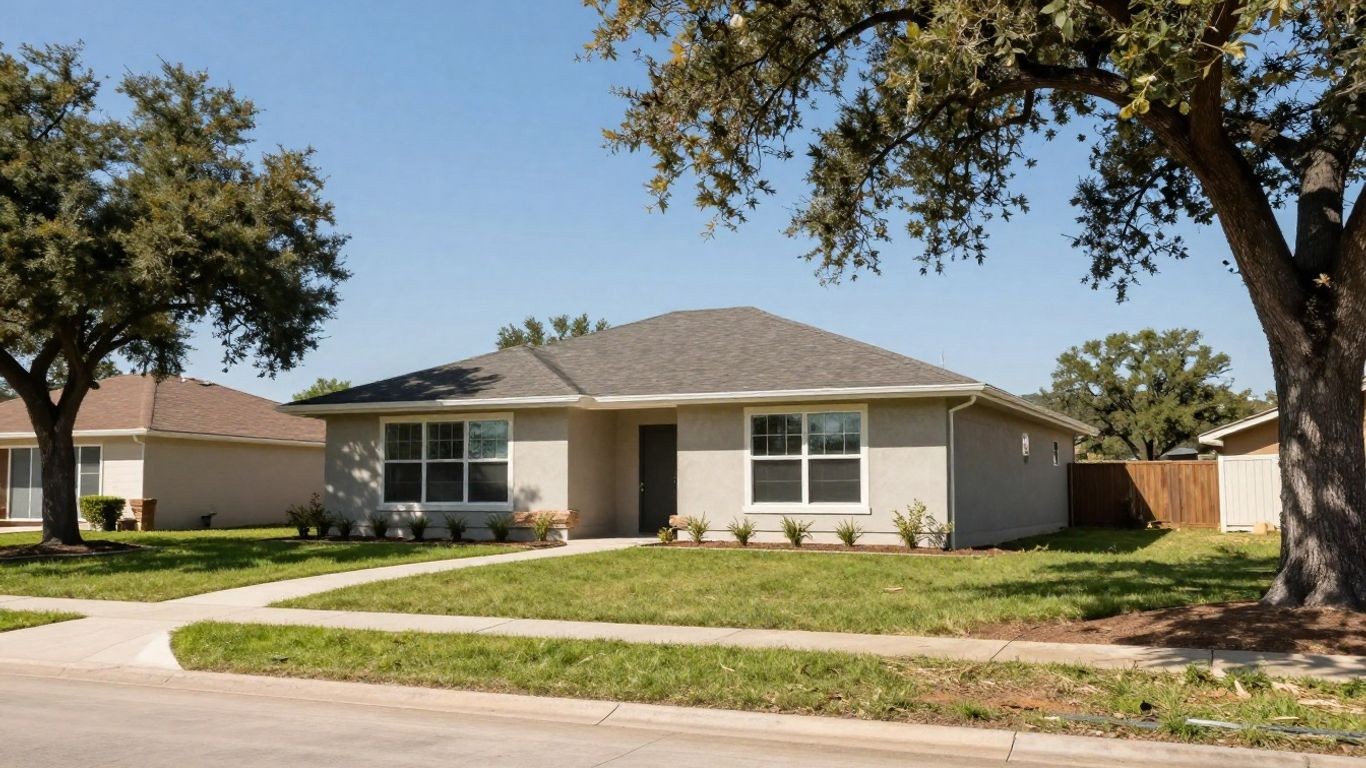
Yes. VA.gov lists buying a manufactured home or lot as an eligible use of a VA-backed purchase loan. Federal manufactured-home regulations also describe loans for a single-wide or double-wide home, a home and lot together, a lot for a manufactured home already owned by the veteran, and certain refinancing or site-preparation structures. Borrowers considering a purchase can also review the VA loan purchase process to understand how the broader transaction works.
That federal eligibility does not mean every VA lender offers every manufactured-home product. Mortgage companies can choose narrower product menus and impose credit, age, foundation, title, insurance, appraisal, or prior-move restrictions beyond the VA baseline. The first lender question should therefore be about the exact property and transaction, not simply whether the company does VA loans.
Borrower Requirements for a Texas VA Manufactured Home Loan
The borrower and the property are reviewed separately. A valid VA benefit does not make an unacceptable property eligible, and a perfect manufactured home does not replace borrower qualification.
- Certificate of Eligibility (COE). The COE documents qualifying VA home-loan entitlement. A lender can often obtain it electronically, and it should be reviewed early if the veteran has used entitlement before.
- Credit and repayment ability. VA and the lender review income, debts, credit history, residual income, and the overall ability to repay. VA does not publish one universal minimum credit score for every lender.
- Primary-residence intent. For a purchase transaction, the veteran generally certifies that the property will be personally occupied as a home within a reasonable time, subject to applicable spouse and service-member rules.
- Sufficient entitlement and guaranty. Available entitlement matters when the borrower already has a VA loan, previously had a loss to VA, or has not restored entitlement after a prior transaction.
- Lender program eligibility. The lender must offer the manufactured-home product, property type, title structure, and occupancy scenario involved. A VA-approved lender can still decide not to originate manufactured-home loans.
Get the borrower side of the file pre-approved before spending time on a property with complicated manufactured-housing records. That allows the lender to focus on the real risk: whether the home and site fit the program. Borrowers can also prepare in advance by reviewing this VA mortgage documents checklist.
VA Manufactured Home Property Requirements
The property review combines federal manufactured-home standards, VA site and occupancy rules, appraisal requirements, Texas ownership records, local zoning and utilities, and the lender’s own collateral policy. The requirements below should be treated as an early screening checklist, not a substitute for the lender’s final underwriting decision.
HUD-Code Construction and Certification Labels
A modern manufactured home should be built to the federal HUD manufactured-home standards. HUD states that each transportable section built after June 15, 1976 must have a certification label, commonly called a HUD tag. If a previously certified home is missing a label, HUD does not simply reissue the metal tag, so the lender may need alternative verification.
Minimum Size for Single-Wide and Double-Wide Homes
VA regulations require a single-wide unit to be at least 10 feet wide with at least 400 square feet of floor area. An assembled double-wide must be at least 20 feet wide with at least 700 square feet. A lender can impose a larger minimum size as an overlay.
Year-Round Residential Facilities
The VA manufactured-home standard requires living facilities for year-round occupancy by one family, including permanent provisions for heat, sleeping, cooking, and sanitation. A recreational vehicle, temporary unit, or structure without normal residential facilities is not the same collateral category.
Acceptable Site, Water, Sanitation, and Road Access
VA site rules address legal placement, approved water and sanitary facilities, an all-weather street or road, and hazards that could affect health, safety, or the home itself. Local zoning and installation rules still apply in Texas.
Foundation and Permanent Attachment
For most VA mortgage programs offered by private lenders on real estate, the manufactured home is expected to be permanently installed and supported by acceptable foundation documentation. The federal manufactured-home regulations also contemplate other structures, so ask whether the lender is using a real-property mortgage program or another manufactured-home guaranty path.
Texas Statement of Ownership
Texas manufactured homes use a Statement of Ownership issued through the TDHCA Manufactured Housing Division. The record identifies the home, ownership, location, liens, and the election to treat the home as personal or real property.
Real-Property Election in Texas
When the home is being financed as real estate, the Texas real-property election and county recording process can be critical. TDHCA instructs owners to submit a copy of the Statement of Ownership recorded with the county clerk in order to perfect the election of real property.
Land Ownership or Leasehold Rights
VA regulations allow qualifying interests in a manufactured-home lot, including fee-simple ownership and certain long-term leasehold estates. Rental sites also appear in the federal manufactured-home rules. Many mortgage lenders, however, require the borrower to own the land and may not finance a home in a leased-lot park.
Clear Title and Lien Position
The lender needs a valid security interest in the collateral. When both the home and land are part of the transaction, title and lien documentation must support the lender’s required first-lien position and the title company must be able to insure the interest being mortgaged.
Utilities, Access, Health, and Safety
The home should have functioning utilities and acceptable access, and the appraisal must address applicable VA Minimum Property Requirements. Defects affecting structural stability, water, sanitation, electrical safety, roof condition, drainage, or other essential systems can trigger repairs or further review.
Primary Residence and Marketability
The property must fit the borrower’s occupancy certification and must be marketable enough for the lender and appraiser to support the collateral. Unusual park restrictions, remote access, unpermitted additions, missing labels, or title conflicts can reduce lender appetite even when the home is physically sound.
What If the Manufactured Home Has Been Moved Before?
A prior relocation should be disclosed immediately. The federal manufactured-home standards cited above do not present a simple universal rule that every previously moved home is automatically ineligible, but relocation history can affect installation records, foundation certification, title continuity, HUD-label verification, appraisal support, and insurance.
Many mortgage lenders apply stricter first-placement or never-moved overlays. Do not rely on a seller’s statement that moving the home “should be fine.” Give the serial numbers, HUD labels, Statement of Ownership, current location, prior location if known, installation paperwork, and foundation records to the lender before ordering the appraisal.
New vs Used Manufactured Homes
VA financing is not limited to brand-new manufactured homes, but used homes usually require more document and condition review. An older HUD-code unit may still satisfy the federal age definition while creating lender concerns about remaining economic life, insurance, roof or floor condition, additions, foundation history, and comparable sales.
For a new home, the focus shifts to dealer or builder contracts, installation, site preparation, permits, foundation and utility completion, final inspection, and appraisal timing. If the home is not yet installed, ask whether the lender offers a construction-to-permanent or one-time-close structure instead of assuming a standard resale purchase process will work.
If the home is not yet installed, ask whether the lender offers a VA construction loan or one-time-close structure instead of assuming a standard resale purchase process will work.
Ways a VA Manufactured Home Transaction Can Be Structured
The phrase “VA manufactured home loan” can describe several different transaction structures. Federal rules are broader than the product menus offered by many private mortgage lenders, so borrowers should identify the structure before comparing rates or closing dates.
In practice, the home-plus-land real-property mortgage is the easiest structure to find among mainstream VA mortgage lenders. Home-only financing on leased land can exist under manufactured-home rules but is much less common in the secondary mortgage market and may require a specialized lender.
- Manufactured home plus land. The borrower buys the home and the lot together, with the lender taking the required lien on the real-estate interest and the manufactured home. This is the most familiar mortgage structure.
- Manufactured home on land already owned. The borrower owns the homesite and finances the manufactured home plus eligible site preparation or installation, subject to the lender’s program.
- Lot for a manufactured home already owned. Federal VA regulations permit financing of an acceptable lot for a manufactured home already owned by the veteran, but lender availability is specialized.
- Home-only on a rental site. VA regulations address acceptable rental sites, but many private mortgage lenders do not offer this structure. If the home remains personal property, a specialized manufactured-home lender may be required.
- Construction or land-and-home package.When the home is being ordered, installed, and completed on a site, a VA construction loan or one-time-close structure may be more appropriate if the lender offers manufactured housing under that program.
| Structure | Land Position | Typical Mortgage Availability | Main Planning Issue |
| Home + lot | Borrower acquires/owns land | Most common VA mortgage path | Title, foundation, real-property treatment, appraisal |
| Home on owned land | Land already owned | Available through selected lenders | Installation, site prep, lien and valuation |
| Lot for owned home | Home already owned | Specialized | Acceptable homesite and combined collateral |
| Home on leased lot | Rental/leasehold site | Limited among mainstream mortgage lenders | Lease/site acceptability and lender overlay |
Ask the lender to identify which row describes your transaction and to confirm the product in writing. A lender that offers VA loans for site-built homes may still decline every manufactured-home structure shown above.
Texas-Specific Title and Ownership Issues
Texas has a dedicated manufactured-housing ownership system, so a normal deed search is not always enough. Buyers should research the TDHCA manufactured-home ownership record before closing and compare it with the seller, serial numbers, HUD labels, tax status, liens, land records, and title commitment.
- Search the TDHCA ownership record. Before buying a used manufactured home, verify the current ownership, serial number, HUD label or Texas Seal information, recorded liens, and location information through the Manufactured Housing Division.
- Confirm personal-property or real-property status. A manufactured home can be treated differently depending on the owner’s election and the land arrangement. The lender and title company should agree on the status required for the loan.
- Perfect the real-property election when required. TDHCA states that a copy of the Statement of Ownership recorded with the county clerk should be submitted to perfect the election of real property.
- Match the home to the land records. If the loan is secured by both the home and land, the legal description, ownership names, liens, and manufactured-home identifiers should all reconcile before closing.
- Resolve taxes and liens early. Manufactured-home tax liens or unresolved ownership changes can delay title clearance. Do not wait for final underwriting to discover a prior owner or lien still appears in the state record.
Texas title work is one of the biggest reasons to start property review before appraisal. A clean borrower file cannot cure a manufactured home whose ownership, land, and lien records do not match.
VA Appraisal and Inspection for Manufactured Homes in Texas
The lender orders the VA appraisal through the VA process. For manufactured housing, the appraiser must value the correct property type and address applicable VA property requirements, while also considering site, marketability, installation, and the documentation available for the home.
VA’s appraisal fee schedule effective May 1, 2026 lists a manufactured-home appraisal fee of $825 for most Texas counties, $850 in a group of higher-volume counties including Bexar, Dallas, Harris, Montgomery, Tarrant, and Williamson, and $950 in certain listed counties. The published timeliness target is generally 10 business days statewide and 7 business days in the specified metro group. Actual scheduling can still vary with property complexity and appraiser availability.
- VA appraisal. Focuses on reasonable value and VA property requirements. The appraisal can require repairs or documentation, but it is not designed to give the buyer a complete mechanical and structural inspection.
- Independent home inspection. Helps the buyer evaluate roof, plumbing, electrical, HVAC, floors, moisture, exterior envelope, skirting, drainage, additions, appliances, and general condition.
- Foundation or engineering review. A lender may require an engineer or other qualified professional to document the installation or foundation, especially when records are missing or the home is being financed as real property.
- HUD-label and data verification. The lender or appraiser may need the certification labels, serial numbers, manufacturer information, or alternative label verification when exterior tags are missing.
If the appraiser or underwriter identifies a manufactured-home issue, ask whether it is a VA requirement, a Texas documentation issue, a title problem, or a lender overlay. The solution depends on the category.
How to Get a VA Loan for a Manufactured Home in Texas
The process is similar to a normal VA purchase, but the property screening should happen earlier. A manufactured-home deal can fail after pre-approval if the lender discovers the wrong construction type, missing HUD labels, unacceptable land rights, title conflicts, or a program overlay. Start by understanding the VA home loan application process before moving forward.
- Confirm VA eligibility and obtain the COE. Have the lender verify your entitlement, funding-fee status, and any prior VA loan use before you shop seriously.
- Get pre-approved with a lender that actually finances manufactured homes. Ask about single-wide versus double-wide, minimum credit score, minimum size, home age, land ownership, leased lots, prior moves, foundation standards, and construction options.
- Screen the property before the contract becomes hard to exit. Collect the year, manufacturer, model, serial numbers, HUD labels, square footage, section count, Statement of Ownership, land details, installation history, and foundation information.
- Write the contract with financing and appraisal protection. Give yourself enough time for title research, appraisal, engineering, repairs, and manufactured-home documentation rather than using a timeline designed for a simple site-built house.
- Complete Texas title and ownership review. The lender and title company should reconcile the TDHCA Statement of Ownership with county land records, liens, legal description, and the intended real-property structure.
- Order the VA appraisal and independent inspection. Respond quickly to requests for HUD-label verification, installation records, foundation documents, repairs, permits, or comparable-sales support.
- Finish underwriting and insurance approval. The lender verifies borrower qualification, collateral eligibility, title, homeowners or manufactured-home insurance, appraisal conditions, and closing documents.
- Review the Loan Estimate and Closing Disclosure before signing. Confirm lender charges, appraisal, title costs, taxes, insurance, credits, funding fee if applicable, and the final cash-to-close figure.
Do not schedule movers, terminate a lease, or make non-refundable installation commitments solely because the borrower is pre-approved. Manufactured-home collateral approval should be substantially complete first.
Down Payment, Funding Fee, and Closing Costs
A qualifying VA purchase can allow no down payment when the borrower has sufficient entitlement, the lender approves the loan, and the value supports the purchase price. VA loans also do not charge monthly private mortgage insurance, but manufactured-home buyers still need to budget for appraisal, title work, taxes, insurance, inspections, engineering, site work, utilities, and any required repairs. You can also use a VA mortgage calculator to estimate potential monthly payments and loan costs.
The VA funding fee may apply unless the borrower qualifies for an exemption. VA also notes a special manufactured-home rule: if a borrower previously used a VA-backed or VA direct loan to purchase only a manufactured home, that prior use does not automatically move the borrower to the subsequent-use funding-fee rate for a later qualifying loan. Ask the lender to verify the COE and funding-fee status rather than calculating it from memory.
Pros and Cons of Using a VA Loan for a Manufactured Home
VA financing can be highly attractive when the home, land, and lender program line up. The main trade-off is not the VA benefit itself; it is the smaller pool of lenders and the additional collateral documentation compared with a conventional site-built home.
Pros
- Possible zero-down financing. Qualified borrowers with sufficient entitlement may be able to preserve cash for moving, reserves, site work, or repairs.
- No monthly PMI. VA loans do not use conventional private mortgage insurance, which can reduce the recurring payment compared with some low-down-payment alternatives.
- Flexible VA underwriting framework. The lender evaluates the complete credit, income, residual-income, and repayment picture rather than relying only on one ratio.
- Home-and-land financing can create long-term ownership stability. When the manufactured home is permanently integrated with owned land and titled correctly, the transaction can function more like ordinary residential real estate.
These benefits are strongest when the home is well documented, insurable, marketable, and located on land with clean title and normal residential access.
Cons
- Fewer lenders. Many VA lenders do not finance manufactured homes at all, and some only accept double-wide homes or home-plus-land transactions.
- More documentation. HUD labels, serial numbers, Texas ownership records, foundation or installation evidence, land title, permits, and prior-move history can all become underwriting issues.
- Property-specific overlays. A home can satisfy broad VA rules and still fail one lender’s minimum age, size, foundation, credit, insurance, or marketability policy.
- Appraisal and repair risk. Manufactured homes can have fewer comparable sales, and older units may need repairs or documentation that lengthen the closing timeline.
A declined property does not necessarily mean the veteran is ineligible for VA financing. It may mean the specific home, title structure, or lender program is the problem.
Questions to Ask a VA Lender Before You Make an Offer
A lender who regularly handles manufactured housing should be able to answer these questions clearly. If the answers are vague, get the property reviewed by underwriting or a manufactured-housing specialist before you rely on the financing.
- Do you finance single-wide homes, double-wide homes, or both? Some lenders exclude single-wide units even though VA regulations define minimum standards for them.
- Do you require the borrower to own the land? Ask whether leased-lot, long-term leasehold, home-only, or land-and-home structures are eligible under the lender’s program.
- What is your minimum year, size, and remaining-life requirement? These are commonly lender-specific rather than one simple universal VA rule.
- Can the home have been moved before? Get the lender’s first-placement or relocation overlay in writing if possible.
- What foundation documentation do you require? Ask whether an existing certification is acceptable or whether a new engineer inspection will be needed.
- What Texas Statement of Ownership status do you require? The title company and lender should agree on personal versus real-property treatment before closing.
- What HUD-label documentation is acceptable if a tag is missing? Do not assume a photo of the serial number will satisfy the lender.
- Do you offer new manufactured-home construction or one-time-close financing? A home that has not yet been installed may require a different loan workflow.
- What insurance must be in place before closing? Manufactured-home age, location, wind exposure, and prior claims can affect insurability and cost.
- What closing timeline should I write into the contract? Manufactured-home title and appraisal issues can take longer than a straightforward site-built purchase.
The goal is not to find the lender with the shortest answer. It is to find one whose product rules match the actual home you want to buy.
Alternatives When a Manufactured Home Does Not Qualify for VA Financing
A denial can come from the borrower, the property, the title structure, or the lender’s overlay. Identify the reason before switching loan programs because a different lender or corrected property record may solve the problem without giving up the VA benefit.
- Try a VA lender with a different manufactured-housing overlay. One lender may reject a property type that another VA lender is willing and able to finance, provided the home still satisfies applicable VA rules.
- Correct title, ownership, or foundation documentation. A curable Texas Statement of Ownership, lien, installation, permit, or foundation problem may be cheaper to fix than replacing the financing.
- Use the modular-home path if the property is actually modular. A factory-built home constructed to state or local code should not be forced into manufactured-home rules.
- Compare FHA or conventional manufactured-home financing. These programs have their own property, down-payment, mortgage-insurance, title, and lender requirements.
- Consider specialized chattel financing when the home remains personal property. This can be relevant for a home on leased land, but rates, terms, consumer protections, and long-term ownership economics can differ significantly from a real-estate mortgage.
Do not switch financing based only on a lower advertised payment. Compare down payment, rate, mortgage insurance, fees, term, land rights, title treatment, and long-term resale flexibility together.
Final Answer
A VA loan can finance a qualifying manufactured home in Texas, including certain home-and-lot structures, but the buyer must solve both the VA eligibility side and the manufactured-home collateral side of the transaction. The biggest factual mistake is assuming every “mobile home” follows the same rules. Construction date, HUD certification, size, land rights, Texas ownership records, title, site, foundation, appraisal, insurance, and lender overlays all matter.
For most buyers using a mainstream VA mortgage lender, the cleanest file is a HUD-code manufactured home on an acceptable site with clear Texas ownership records, normal residential utilities and access, strong title, satisfactory appraisal, and a lender-approved installation or real-property structure. Screen those items before the contract becomes expensive to exit.
Frequently Asked Questions
Can I buy a mobile home with a VA loan in Texas?
Possibly, but the terminology matters. Modern VA mortgage financing is generally focused on HUD-code manufactured homes. A pre-June 15, 1976 mobile home normally lacks the modern HUD certification used for manufactured housing and can be very difficult to finance.
Can I use a VA loan for a single-wide manufactured home?
Federal VA manufactured-home regulations recognize single-wide units and require at least 10 feet of width and 400 square feet of floor area. Many private lenders apply stricter overlays or do not finance single-wide homes, so lender availability must be confirmed.
Can I use a VA loan for a double-wide?
Yes, a qualifying double-wide can be eligible. VA regulations require an assembled double-wide to be at least 20 feet wide and 700 square feet, and the lender will also review HUD labels, title, site, foundation, appraisal, and other collateral requirements.
Does a VA manufactured home have to be built after 1976?
HUD describes manufactured homes as factory-built homes constructed to the federal standards in effect after June 15, 1976, with certification labels on the transportable sections. Earlier factory-built non-modular homes are generally referred to as mobile homes.
Does the manufactured home have to be permanently attached to land?
For the real-property mortgage programs commonly offered by private VA lenders, permanent installation and acceptable foundation documentation are often required. Federal VA manufactured-home regulations also contemplate other structures, including acceptable rental sites, so the exact answer depends on the lender product.
Can I buy the land and manufactured home with one VA loan?
Federal VA regulations allow combination transactions involving a manufactured home and lot, subject to title, site, value, security, and lender requirements. Not every VA lender offers this product.
Can I put a VA-financed manufactured home in a mobile home park?
VA regulations address acceptable rental sites, but many mainstream mortgage lenders do not finance home-only transactions on leased lots. Confirm the lender’s program before choosing a park.
What is the Texas Statement of Ownership?
It is the manufactured-home ownership record administered by the TDHCA Manufactured Housing Division. It records identifying information, ownership, location, liens, and the election to treat the home as personal or real property.
What if the HUD tag is missing?
Do not assume the home is ineligible. HUD states that it does not reissue missing certification labels, but verification of a previously certified home may be available through an approved label-verification process. Ask the lender what documentation it will accept.
Is the VA appraisal the same as a manufactured-home inspection?
No. The VA appraisal addresses reasonable value and property requirements for the loan. An independent inspection gives the buyer a more detailed assessment of condition and systems.
Can a used manufactured home qualify for a VA loan?
Potentially. Used homes can require additional review of age, condition, remaining life, HUD documentation, prior moves, installation, title, insurance, and comparable sales. Lender overlays vary substantially.
How long does a VA manufactured-home loan take to close in Texas?
There is no universal closing time. Borrower underwriting may be straightforward while manufactured-home title research, appraisal, engineering, insurance, or missing records extend the timeline. Give the lender the property information before writing a short financing deadline.


