


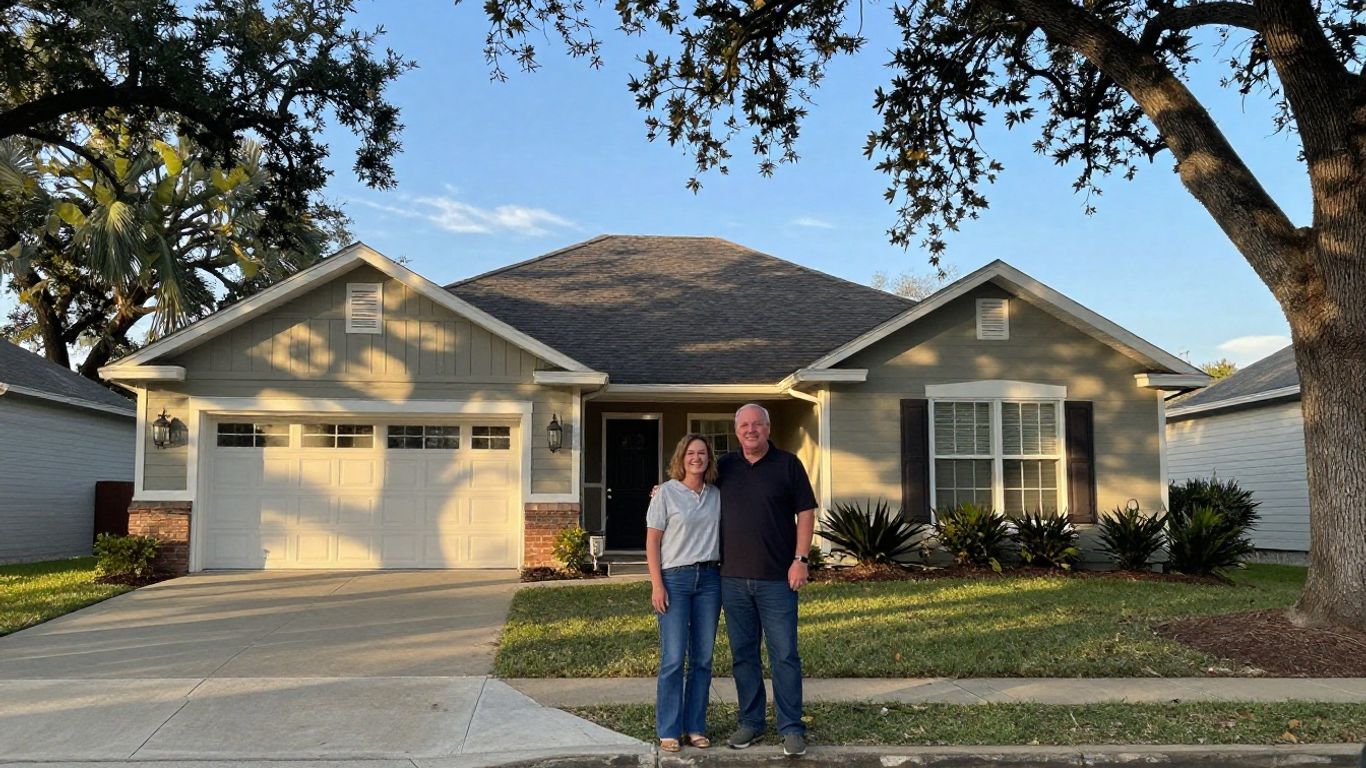
A joint VA loan in Texas can allow an eligible Veteran or service member to buy a primary residence with another borrower, including a non-Veteran partner, family member, friend, or another VA-eligible borrower. The key is that VA rules do not treat every two-borrower application the same: a Veteran buying with a spouse is generally handled differently from a Veteran buying with a non-spouse, and the VA guaranty may apply only to the eligible borrower’s share.
That difference can affect entitlement, down payment, prior-approval processing, funding-fee calculations, occupancy, and the amount of documentation required. This 2026 Texas guide explains the borrower combinations, current VA procedures, practical risks, and steps to take before making an offer.
Quick Answer: Can You Get a Joint VA Loan with a Non-Veteran in Texas?
Yes, an eligible Veteran can potentially use a VA loan with a non-spouse co-borrower in Texas. When the other borrower is a non-Veteran and not the Veteran’s spouse, the loan is typically processed as a joint VA loan, and VA guarantees only the eligible Veteran’s portion. That can create a down-payment requirement on the unguaranteed share and usually requires VA prior-approval processing. A Veteran and non-Veteran spouse, by contrast, are generally treated as a standard VA borrower unit rather than the same joint-loan structure.
What Is a Joint VA Loan?
A joint VA loan is a VA-backed mortgage involving an eligible Veteran or service member and one or more additional borrowers in a structure that is not treated like a simple Veteran-and-spouse loan. The term most commonly refers to a Veteran buying with a non-spouse non-Veteran, but it can also include multiple Veterans using entitlement in the same transaction.
The important point is that a joint VA loan is not a separate VA product with its own interest-rate program. It is a way of structuring a VA-guaranteed mortgage when more than one borrower is involved, and VA entitlement is not being used in the same way across the full loan.
Traditional VA Loan vs. Joint VA Loan
A standard VA purchase is typically an eligible Veteran alone or an eligible Veteran with a spouse. A true joint loan becomes more complex when a non-spouse borrower does not have VA entitlement or when multiple eligible Veterans are using entitlement differently.
- Veteran alone. Standard VA structure when eligibility, entitlement, income, credit, occupancy, and property requirements are met.
- Veteran + non-Veteran spouse. Generally treated as a regular VA loan, even though only the Veteran earned the home-loan benefit.
- Veteran + non-Veteran non-spouse. Joint VA structure. The VA guaranty applies only to the Veteran’s share, so down-payment and prior-approval issues can arise.
- Veteran + Veteran spouse. Can be structured with one or both Veterans using entitlement depending on the file.
- Two or more non-spouse Veterans. Joint loan. If all are using entitlement, VA Circular 26-22-09 changed the historical pre-closing review procedure for lenders with automatic authority.
Do not use the phrase “joint VA loan” as shorthand for every mortgage with two names. The relationship between the borrowers and which borrowers are using entitlement determine the actual VA structure.
Who Can Be a Co-Borrower on a Joint VA Loan in Texas?
 The VA program can accommodate several borrower combinations, but lender overlays matter. A lender may choose not to offer every technically permissible joint-loan scenario because these files can require manual VA review, additional cash, and more complex underwriting.
- Unmarried partner. A common joint-loan scenario when the Veteran wants to buy with a fiancé, long-term partner, or other co-owner before marriage.
- Parent or adult child. A family member may potentially co-borrow if the lender accepts the structure and the occupancy and underwriting requirements are satisfied.
- Sibling or other relative. Relationship alone does not create VA eligibility; the lender still evaluates the non-Veteran share and all borrower finances.
- Friend or unrelated co-owner. Possible in some joint-loan structures, but co-ownership and exit planning become especially important.
- Another VA-eligible Veteran. The loan may use one or both Veterans’ entitlement. The guaranty and funding-fee treatment depend on who actually uses entitlement.
A co-borrower is not a casual helper. They sign the debt, their financial profile becomes part of underwriting, and they generally share ownership rights according to the closing and title documents.
Co-Borrower vs. Co-Signer on a VA Loan
These terms are often used interchangeably online, but they describe different roles. A co-borrower shares the mortgage obligation and usually shares ownership. A co-signer primarily guarantees repayment and may not hold the same ownership interest.
VA loans are not a broad non-occupant co-signer program like some conventional scenarios. If another person’s income is needed to qualify, the lender should confirm whether that person can be an acceptable borrower under the actual VA structure rather than simply labeling them a co-signer.
Joint VA Loan Requirements in Texas
Joint VA loans must satisfy the ordinary VA purchase rules plus additional requirements created by the borrower mix. The lender reviews the eligible borrower’s VA status and also underwrites every borrower who will be obligated on the mortgage.
- Valid VA eligibility and entitlement. Each borrower using VA entitlement needs a current Certificate of Eligibility and sufficient available entitlement for the proposed structure.
- Qualifying income and credit. The lender reviews documented income, employment, credit history, recurring debts, assets, and residual income. A strong co-borrower does not erase a weak file automatically.
- Primary-residence intent. The Veteran whose entitlement supports the loan must satisfy VA occupancy requirements. The lender also needs to understand who else will occupy the property.
- VA appraisal and eligible property. The home must meet VA valuation and Minimum Property Requirements, and the sales price cannot simply override the appraised value.
- Acceptable title and ownership. The final ownership structure must be acceptable to the lender, title company, and VA processing requirements.
- Prior-approval processing when required. Veteran/non-spouse non-Veteran loans remain in the category where lenders should follow VA prior-approval procedures.
Because these files are less standardized than a Veteran-and-spouse purchase, get the lender’s joint-loan review before writing an aggressive closing deadline into the contract.
Do Joint VA Loans Require VA Prior Approval?
Sometimes. This is an area where older articles and simplified summaries can be misleading. VA Circular 26-22-09 changed the procedure for certain joint loans involving two or more Veterans who are all using entitlement, but it did not eliminate prior-approval procedures for every joint loan.
Under the current circular, lenders with VA automatic authority have VA’s prior approval to close a loan to two or more Veterans who are all using entitlement, provided all applicable requirements are met. The same circular specifically states that existing procedures continue for joint loans to a Veteran and one or more non-spouse non-Veterans, and for loans involving non-spouse Veterans who are not using entitlement.
For Texas buyers, the practical takeaway is timing: if the loan includes a non-spouse non-Veteran, do not assume the file can be handled exactly like an ordinary automatic VA approval.
How VA Entitlement Works on a Joint Loan
VA entitlement is the amount of guaranty available to support a VA-backed loan. In a joint loan, the entitlement analysis follows the borrowers who are actually using the VA benefit.
If one Veteran buys with a non-Veteran non-spouse, the VA guaranty is based only on the Veteran’s portion. The non-Veteran’s share is not guaranteed by VA. If two Veterans both use entitlement, each can contribute guaranty to their respective portion of the loan. If one eligible Veteran chooses not to use entitlement, that person’s share is treated differently from a share backed by entitlement.
Do Joint VA Loans Require a Down Payment?
A joint VA loan can require a down payment even though standard VA purchases are famous for zero-down financing. The reason is the guaranty gap: the VA does not guaranty the non-Veteran non-spouse borrower’s portion of the loan.
On a simple 50/50 Veteran + non-Veteran structure, lenders commonly need additional cash to compensate for the unguaranteed half. The exact amount depends on the appraised value, loan amount, entitlement available, ownership/loan allocation, and the lender’s secondary-market or portfolio requirements.
Illustrative Example: If a Veteran and non-Veteran partner buy a $400,000 home and the lender allocates the obligation equally, the VA guaranty supports only the Veteran’s $200,000 share. A lender may therefore require cash to cover the guaranty shortfall on the non-Veteran’s share. Do not treat this illustration as a universal 12.5% rule for every file; the lender must calculate the actual joint-loan guaranty and down payment for the specific transaction.
For a broader explanation of entitlement, review VA Loan Certificate of Eligibility before making an offer.
Can Two Veterans Combine VA Entitlement?
Yes. Two or more VA-eligible borrowers can potentially use entitlement in the same joint loan. This can be useful for unmarried Veterans buying together, military friends sharing a property, Veteran siblings, or married Veterans who both want entitlement applied.
The lender and VA must document how entitlement is being used. If the Veterans use unequal entitlement amounts, the file may require a written agreement showing the allocation. Each Veteran’s COE and remaining entitlement should be reviewed separately.
A joint loan can also affect future VA usage because entitlement remains tied to the loan until it is restored or otherwise released under VA rules. Buyers should ask how much entitlement each person will have left after closing.
What Happens When One Veteran Has Partial Entitlement?
A borrower who already has a VA loan or has entitlement tied to a prior loan may still have remaining entitlement. In a joint loan with another eligible Veteran, the lender can evaluate the available entitlement from each borrower and determine whether the combined guaranty supports the proposed loan.
Review the site’s VA loan down payment guide before assuming that a second VA purchase will be zero down.
How the VA Funding Fee Works on a Joint VA Loan
The VA funding fee is tied to the borrowers who are using VA entitlement and can be waived when an eligible borrower qualifies for an exemption. Joint-loan calculations can therefore differ from a standard one-Veteran purchase.
If two Veterans are both using entitlement, each borrower’s funding-fee status should be checked. If one Veteran is exempt and the other is not, the lender must calculate the fee according to the actual entitlement and loan allocation. A non-Veteran non-spouse does not acquire VA entitlement merely by joining the loan.
Check the VA Funding Fee Exemption guide before the final Closing Disclosure is prepared.
Credit, Income, DTI, and Residual Income on Joint VA Loans
Adding another borrower can improve purchasing power, but it can also make underwriting harder. The lender considers the co-borrower’s income and assets alongside their debts, credit history, and other monthly obligations.
- Income can help. Stable documented income from an acceptable co-borrower may increase the amount of housing expense the household can support.
- Debt can offset the benefit. Auto loans, student debt, credit cards, support obligations, and other recurring liabilities reduce the value of added income.
- Credit still matters. VA does not publish one universal minimum credit score, but lenders can apply their own credit standards to every borrower.
- Residual income still matters. Texas is in the VA South Region, and the household still needs sufficient residual income after major obligations are considered.
- Qualification is not the same as affordability. A larger approval amount does not mean the household should automatically spend to the maximum.
The best joint application is not simply the one with the most combined income. It is the one with stable earnings, manageable debt, adequate reserves, and a payment that remains sustainable if one borrower’s finances change.
See the current Texas VA residual income guide for the South Region benchmarks used in Texas.
Occupancy Rules for Joint VA Loans
VA purchase loans are primary-residence financing. At minimum, the Veteran whose entitlement supports the loan must satisfy the VA occupancy requirement. Joint-loan files also require the lender to understand who will actually live in the property and how the co-borrower fits the ownership and repayment structure.
Do not assume a non-occupying relative can be added solely to strengthen income. Joint VA loans are not designed as a generic non-occupant co-borrower workaround. Tell the lender exactly who will occupy the home before the loan is structured.
Joint VA Loan vs. Veteran + Spouse VA Loan
A Veteran and a non-Veteran spouse generally receive more straightforward VA treatment than a Veteran and an unmarried non-Veteran partner. The spouse can be included as a co-borrower, and the Veteran’s entitlement can support the standard VA loan structure.
This difference is why marital status can materially change the mortgage analysis. An unmarried couple that plans to marry soon should ask the lender how closing before versus after marriage would affect the loan structure, down payment, processing, and title.
Joint VA Loan Borrower Combinations Compared
The borrower combinations below show why the phrase “joint VA loan” needs context. Start with the relationship and entitlement use, then ask the lender to confirm the exact processing path.
This is the only comparison table in the article because the borrower mix is where a side-by-side view adds the most value. The details still need to be confirmed for the actual file.
| Borrower Mix | Entitlement Used | Typical Structure | Down Payment | VA Processing Note |
| Veteran alone | Veteran | Standard VA structure | Often possible with full entitlement | Standard VA processing |
| Veteran + non-Veteran spouse | Veteran | Generally standard VA structure | Often possible with full entitlement | Spouse treatment differs from non-spouse |
| Veteran + non-Veteran non-spouse | Veteran share only | Joint VA loan | May be required | Prior-approval procedures apply |
| Two Veterans, both using entitlement | Both eligible shares | Joint VA loan | Can be possible with sufficient guaranty | Automatic lenders received prior approval to close, subject to requirements |
| Two Veterans, only one using entitlement | Using Veteran share only | Joint VA loan | May be required | Existing joint-loan procedures apply |
The table is a planning guide, not a loan approval. Entitlement, guaranty, lender overlays, property value, and borrower finances can change the final structure.
Benefits of a Joint VA Loan
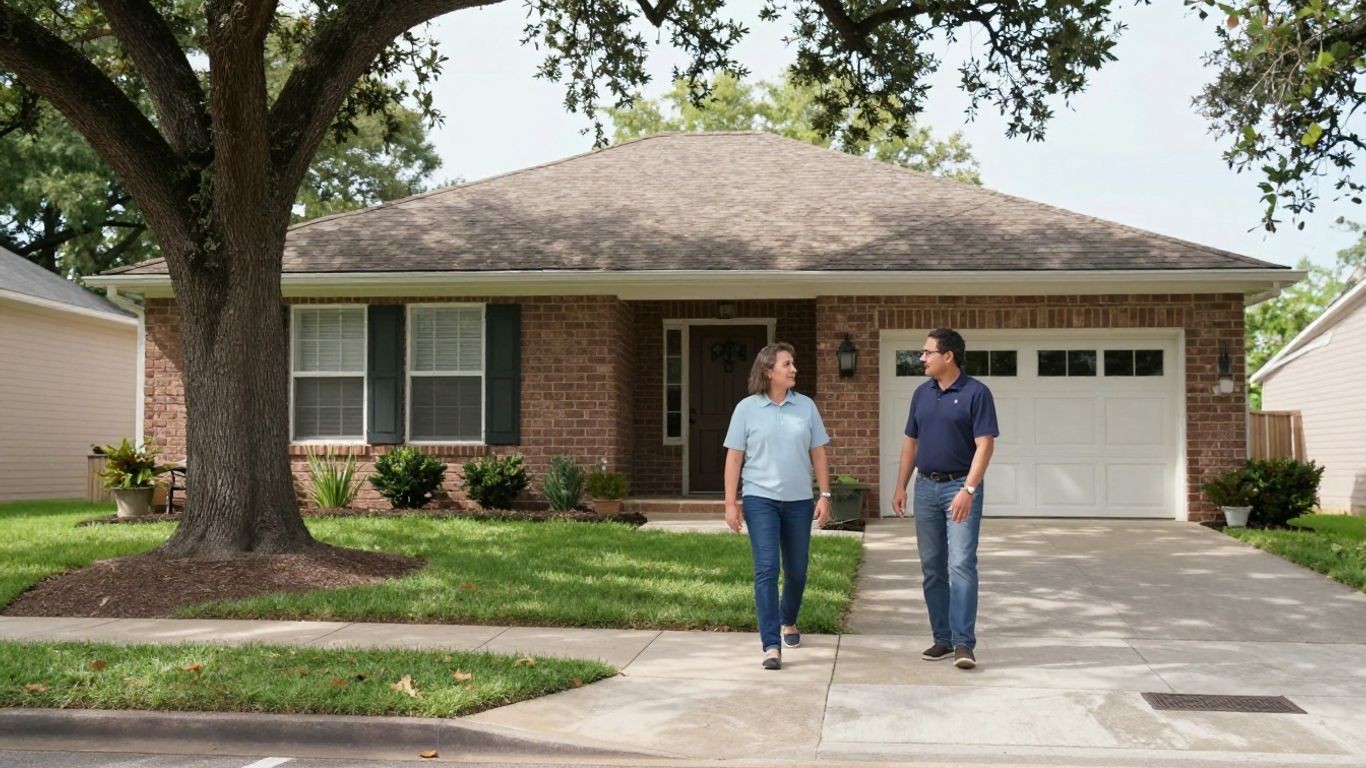
A joint VA loan can solve a real ownership or qualification problem, but it should be used because the shared structure fits the household, not simply because adding a name appears to increase income.
- Combine qualifying income. Two borrowers may support a larger purchase or stronger residual-income position than one borrower alone.
- Buy with an unmarried partner. The structure can allow a Veteran to purchase jointly before marriage when both parties want ownership and repayment responsibility.
- Purchase with another Veteran. Multiple eligible borrowers can potentially combine entitlement and share ownership.
- Share cash and reserves. Two borrowers can combine documented assets for allowable down payment, closing, and reserve needs.
- Support more complex ownership goals. Joint financing may make sense for a family or long-term partnership that intentionally wants shared ownership.
The benefit is strongest when both borrowers improve the file and have a clear long-term plan for the property.
Potential Drawbacks of a Joint VA Loan
Joint loans can also remove some of the simplicity that makes a standard VA purchase attractive. The trade-offs should be understood before either borrower becomes contractually obligated.
- Possible down payment. A non-Veteran non-spouse share is not VA-guaranteed, so the lender may require significant cash to cover the guaranty gap.
- More complex processing. Prior approval, entitlement allocation, guaranty calculations, and manual documentation can extend the timeline.
- Shared liability. Each borrower can remain responsible for the mortgage even if the personal relationship changes.
- Entitlement can remain tied up. Veterans using entitlement may have less available for future VA purchases until entitlement is restored.
- Fewer lender options. Not every VA lender chooses to originate Veteran/non-Veteran joint loans.
If the only reason for adding the second borrower is income, compare the joint VA structure with alternative financing before assuming it is the cheapest or easiest option.
When a Joint VA Loan May Make Sense
A joint VA loan is most useful when the borrowers genuinely want to own the home together and the added borrower materially improves the transaction. These scenarios are common reasons to explore the option.
- Unmarried couple buying together. Both parties want title ownership and intend to share the mortgage before marriage.
- Veteran buying with a parent or adult child. The family intends to occupy and own the property together, and the lender accepts the structure.
- Two Veterans combining resources. Both have entitlement and want to share a primary-residence purchase.
- Veteran with remaining entitlement. Another eligible borrower may help support a second VA purchase depending on the entitlement available.
- Higher-cost Texas purchase. Combined qualifying income may help with a larger home, provided taxes, insurance, residual income, and cash needs remain manageable.
A lender should run both the joint VA scenario and any realistic alternative so you can compare cash to close, monthly payment, entitlement use, and long-term flexibility.
When a Joint VA Loan May Not Be the Best Choice
The VA option is not automatically superior just because one borrower is eligible. If the non-Veteran share creates a large down payment or complex approval path, another mortgage structure may fit better.
- The Veteran can qualify comfortably alone. Keeping the loan in the eligible borrower’s name may preserve a simpler VA structure and reduce cash requirements.
- The co-borrower will not occupy the home. A conventional or other product may be better suited to a true non-occupant co-borrower arrangement.
- The joint down payment is too high. Compare conventional and FHA financing, where the entire loan follows one program rather than a split guaranty.
- The co-borrower’s credit or debt weakens the file. Added income is not useful if liabilities or credit problems create a worse underwriting result.
- The ownership relationship is uncertain. Do not use a 30-year mortgage to solve a short-term relationship or financial problem.
The best loan is the one that fits both the mortgage rules and the co-ownership relationship after closing.
How to Apply for a Joint VA Loan in Texas
Start the joint-loan review earlier than you would for a routine VA purchase. The lender needs enough time to verify entitlement, identify the borrower combination, and determine whether prior approval and a down payment are required.
1. Identify every borrower and relationship.
Tell the lender whether the second borrower is a spouse, unmarried partner, relative, friend, or another Veteran.
2. Pull the COE for every Veteran using entitlement.
The lender needs current eligibility and entitlement information before calculating the guaranty.
3. Complete a full joint preapproval.
Provide income, employment, assets, debts, credit authorization, and identification for each borrower.
4. Ask for the joint-loan guaranty and down-payment calculation.
Get the expected cash requirement in writing before shopping at the top of your budget.
5. Confirm the VA processing path.
Ask whether the file requires prior approval and whether the lender has experience closing that exact joint-loan combination.
6. Decide title and co-ownership structure.
For unmarried borrowers, consider independent legal advice about ownership percentages, sale rights, repairs, and what happens if one person wants out.
7. Make an offer with a realistic timeline.
Account for VA appraisal, title review, underwriting, and any manual VA review.
8. Review final entitlement, funding fee, and cash to close.
Compare the Closing Disclosure with the original joint-loan estimate before signing.
Also review How to Apply for a VA Home Loan and the VA Mortgage Documents Checklist before submitting the file.
Co-Ownership Questions Unmarried Borrowers Should Answer Before Closing
The mortgage documents explain the debt, but they may not answer every private ownership question between two unmarried people. A separate co-ownership discussion can prevent future disputes.
- Ownership percentage. Decide whether title ownership is equal or follows each person’s cash contribution.
- Monthly payment split. Agree on who pays what and what happens if one person temporarily cannot contribute.
- Repairs and improvements. Clarify responsibility for major maintenance, renovations, insurance deductibles, and emergency costs.
- Exit or breakup plan. Discuss buyout, refinance, sale, and move-out scenarios before they become urgent.
- Sale proceeds. Understand how equity will be divided and whether documented unequal contributions affect the final split.
Mortgage advice does not replace legal advice about Texas property ownership. Unmarried co-owners should consider speaking with a Texas real estate attorney about a written co-ownership agreement.
Common Joint VA Loan Mistakes to Avoid While Applying for a Joint VA Loan
Most joint-loan problems happen because borrowers assume the file will work like a standard zero-down VA purchase. The more unusual the borrower mix, the more important it is to confirm the structure before contract deadlines begin.
- Assuming every two-borrower VA loan is a joint loan. A Veteran and non-Veteran spouse are generally treated differently from a Veteran and non-spouse borrower.
- Assuming zero down is guaranteed. The non-Veteran non-spouse portion is not guaranteed by VA, so cash may be required.
- Choosing a lender before asking whether it offers joint loans. Many lenders do not actively originate Veteran/non-Veteran joint-loan files.
- Ignoring prior-approval timing. Some joint combinations remain subject to VA prior-approval procedures and can take longer than an ordinary automatic VA loan.
- Adding a borrower without reviewing their debt. More income does not always improve the file if the co-borrower brings high monthly obligations or weaker credit.
- Using the co-borrower as a non-occupant income helper. The joint structure should match actual ownership and occupancy, not be used as a workaround without lender approval.
- Skipping the co-ownership agreement conversation. Unmarried borrowers should plan for sale, refinance, repairs, missed payments, and relationship changes before closing.
- Forgetting future entitlement. Veterans using entitlement should understand how much remains available after the joint purchase.
A written joint-loan scenario from an experienced VA lender can prevent nearly all of these mistakes before you spend money on inspections, appraisal, or earnest money.
Final Answer
A joint VA loan in Texas can be a strong option when an eligible Veteran truly wants to buy and own a home with another borrower. The most important distinction is whether the second borrower is a spouse, a non-spouse non-Veteran, or another VA-eligible Veteran, because that determines how entitlement, guaranty, down payment, prior approval, and funding-fee treatment are handled.
Before making an offer, get a lender to verify every COE, calculate the guaranty, estimate the down payment and cash to close, confirm the VA processing path, and explain how the loan will affect future entitlement. For unmarried co-borrowers, pair the mortgage review with a clear written plan for ownership and exit decisions.
Need a Joint VA Loan Review in Texas? Texas VA Mortgage specializes in VA purchase, construction, refinance, and complex entitlement scenarios. Start your VA loan application or call (888) 295-4055 to have a VA loan specialist review the borrower combination, COEs, entitlement, and expected cash requirement.
Frequently Asked Questions
Can a Veteran get a VA loan with a non-Veteran in Texas?
Yes, potentially. A Veteran can apply with a non-spouse non-Veteran, but the loan is a joint VA structure and the VA guaranty applies only to the eligible Veteran’s portion.
Can an unmarried partner be on a VA loan?
Potentially, yes. An unmarried partner may be a co-borrower if the lender offers the joint-loan structure and all VA, underwriting, occupancy, and property requirements are met.
Does a non-Veteran spouse require a joint VA loan?
Generally no. A Veteran and non-Veteran spouse are typically handled as a standard VA borrower unit rather than the same Veteran/non-spouse joint-loan structure.
Do joint VA loans require a down payment?
They may. When a non-Veteran non-spouse is on the loan, the non-Veteran share is not guaranteed by VA, so the lender may require cash to cover the guaranty shortfall.
Can two Veterans buy a home together with a VA loan?
Yes. Two or more eligible Veterans can potentially use entitlement together in a joint VA loan, subject to underwriting, entitlement, occupancy, appraisal, and property requirements.
Do all Veterans on a joint loan have to use entitlement?
No, but the guaranty changes when an eligible Veteran does not use entitlement. Ask the lender to show the entitlement allocation and down-payment effect.
Does a joint VA loan require VA prior approval?
Veteran/non-spouse non-Veteran joint loans continue to follow prior-approval procedures. VA Circular 26-22-09 streamlined certain Veteran/Veteran loans where all Veterans use entitlement, but it did not eliminate prior approval for every joint-loan type.
Can a parent co-borrow on a VA loan?
Potentially. A parent may be considered in a joint structure, but the lender must accept the scenario and confirm occupancy, guaranty, underwriting, and ownership requirements.
Can a friend co-borrow on a VA loan?
Potentially, yes. An unrelated non-Veteran friend can create a Veteran/non-Veteran joint loan, but down-payment and prior-approval requirements may make the file more complex.
Does the joint borrower need good credit?
The lender evaluates the credit and debts of every borrower. A co-borrower’s weak credit or high debt can reduce rather than improve qualification.
Does adding a co-borrower increase how much I can buy?
It can if the added stable income outweighs the co-borrower’s debts and the household still meets DTI, residual income, and lender requirements.
Is a joint VA loan better than a conventional loan?
Not always. Compare the joint VA cash requirement, payment, funding fee, entitlement use, and processing timeline with conventional or other financing before deciding.


