


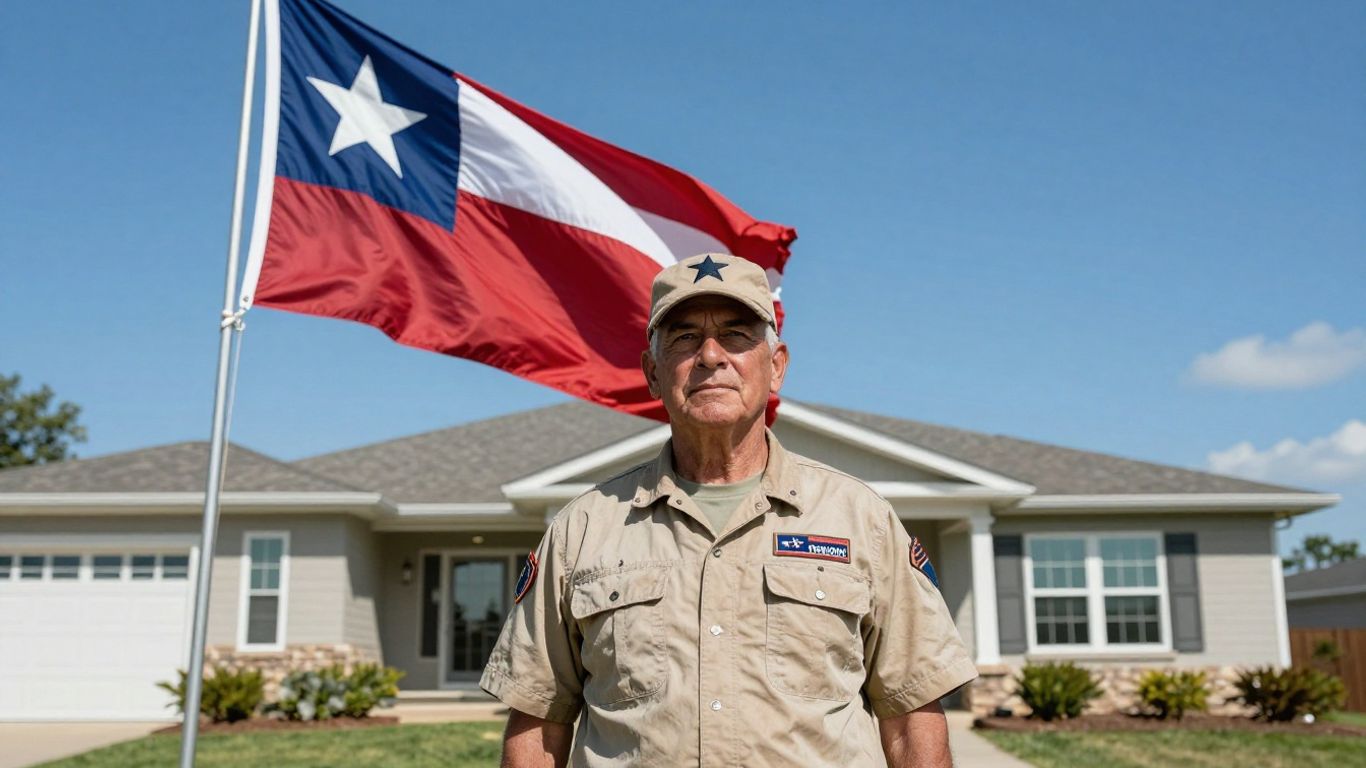
Texas veterans benefits can help eligible service members, veterans, disabled veterans, surviving spouses, and military families reduce education costs, lower property taxes, access housing support, find employment resources, and connect with federal VA programs. Texas offers powerful state-level benefits such as the Hazlewood Act, disabled veteran property tax exemptions, Texas Veterans Land Board loan programs, employment assistance, and local advocacy through the Texas Veterans Commission.
These benefits can work alongside federal resources like VA home loans, disability compensation, healthcare, education benefits, and housing support. This guide explains the most important Texas veterans benefits, who may qualify, how to apply, what documents you need, and how to avoid missing valuable programs that can support your long-term financial stability.
Quick Answer: What Benefits Do Texas Veterans Get?
Texas veterans may qualify for a wide range of benefits, including education support through the Hazlewood Act, disabled veteran property tax exemptions, Texas Veterans Land Board loan programs, employment services, veteran preference in certain public jobs, state veteran homes and cemeteries, and help from the Texas Veterans Commission. These state programs can be combined with federal VA benefits such as VA home loans, disability compensation, VA healthcare, GI Bill education benefits, and housing grants. Eligibility depends on the program, service history, discharge status, Texas residency, disability rating, and documentation.
Understanding Texas Veterans Benefits
 It’s easier to navigate civilian life after military service when you know the support systems available at the state and federal level. Texas is one of the more veteran-friendly states in the nation and has a long track record of programs to benefit veterans, military retirees, disabled veterans, and family members who have lost their loved ones. But not all benefits are available to all veterans, and some benefits have specific eligibility requirements.
Many veterans only consider federal VA benefits and ignore Texas-specific benefits. This may result in the loss of tuition exemptions, property tax savings, housing loan options, employment support, and local claims assistance. Veterans planning to purchase a home should also understand VA loan eligibility requirements before exploring housing benefits. The first step in a good benefits program is to know how state and federal programs work together and then apply for the programs that apply to you.
For instance, a disabled veteran may receive VA disability compensation, benefit from a Texas disabled veteran property tax exemption, apply for a VA home loan, and receive claims assistance from the Texas Veterans Commission. Veterans who are unsure about the process can also review how to apply for a VA home loan before starting.
Texas Veterans Benefits at a Glance
| Benefit Category | What It May Provide | Best For | Important Note |
| Education | Hazlewood Act tuition exemption and federal education benefits | Veterans, spouses, and dependents pursuing college | Eligibility rules are specific and should be verified before enrollment |
| Property Tax | Partial or full exemptions based on disability rating | Disabled veterans and qualifying surviving spouses | Apply through the local county appraisal district |
| Housing | VLB loans, VA-backed home loans, home improvement support | Veterans buying land, homes, or improving a residence | VLB loans are not free land grants |
| Employment | Job matching, career counseling, hiring preference, and training support | Veterans entering the civilian workforce | Use state and local workforce offices for guidance |
| Healthcare | VA healthcare and related federal services | Eligible veterans with medical needs | Enrollment is handled through VA systems |
| Claims Help | Claims counseling and advocacy | Veterans filing disability or benefit claims | Texas Veterans Commission can help at no cost |
Eligibility Requirements for Texas Veterans Benefits
The eligibility is based on the benefit. Some programs are based on federal veteran status, others on Texas residency, a specific discharge status, a disability rating, or service-connected documentation. Don’t assume that if you are approved for one benefit, you will automatically be approved for every benefit; read the specific rules for each program before applying.
Service Requirements
The majority of veteran benefits will need verification of eligibility for military service. The DD214 is frequently used to verify service dates, branch, discharge, and other important information. Service verification may be accepted for active duty members or other official military documents for Guard and Reserve members for some programs.
Some state programs may require a discharge under honorable conditions (however, the language may differ depending on the benefit). If your discharge is not honorable, you should consult a qualified Veterans Service Officer before assuming that you are ineligible to apply for federal and state reviews, as there are more complex “yes or no” answers.
Texas Residency Requirements
Some of the Texas benefits will require you to be a Texas resident at the time of your application, and some will require Texas to be your home of record or state of entry into service. Residency can be established by documents like a Texas driver’s license, voter registration, utility bills, lease, deed, property tax statement, or school residency record.
Education benefits and Texas Veterans Land Board programs are particularly affected by residency requirements. Make sure that you check with the agency that runs the benefit before planning around it to see if it is a residency language.
Documents You Should Gather Before Applying
The Certificate of Eligibility (COE) shows VA home loan eligibility to lenders and is commonly required when applying for VA-backed mortgage programs. Before beginning the process, review the VA mortgage documents checklist to make sure you have all required paperwork.
| Document | Why It Matters | Commonly Needed For |
| DD214 or discharge papers | Verifies service dates and discharge status | Most veterans benefits |
| VA disability rating letter | Shows the service-connected disability percentage | Property tax exemptions, disability-based benefits |
| Certificate of Eligibility (COE) | Shows VA home loan eligibility to lenders | VA home loans and construction loans |
| Texas driver license or ID | Helps prove Texas residency | State benefits and property tax applications |
| Proof of address | Shows current residence | VLB, school, and county programs |
| Marriage certificate | Verifies the spouse relationship | Surviving spouse or transferred benefits |
| School records | Needed for education benefit review | Hazlewood Act and dependent education benefits |
| Property records | Confirms ownership and homestead status | Property tax exemptions |
Key Texas State Veterans Benefits
 There are a number of state benefits that can significantly impact education, housing, taxes, employment, and long-term planning in Texas. The best benefits may be subject to residency, service requirements, disability, and proper application.
Texas Has No Personal State Income Tax
There is no state income tax in Texas. This is not a benefit for veterans only, but it is important for veterans as it will result in military retirement pay, VA disability pay, Social Security, pensions, and employment income being exempt from the Texas personal income tax.
This can be particularly useful for veterans who are relocating from a state that imposes an income tax. This can be valuable for veterans who are relocating from a state that taxes income. Texas, however, is very dependent on property taxes and sales taxes, so veterans should still look at the complete cost of living before deciding where to live.
Hazlewood Act Education Benefits
The Hazlewood Act is one of the most valuable Texas education benefits for qualified veterans and, in some cases, eligible spouses or dependent children. It can provide a tuition exemption at Texas public colleges and universities, subject to program rules, eligibility limits, and institutional requirements.
The Hazlewood Act generally does not cover every education-related cost. Students may still be responsible for fees, books, housing, supplies, transportation, and other expenses. Because eligibility can depend on Texas residency at the time of entry, discharge status, benefit transfer rules, and unused entitlement, veterans should confirm details with the school’s veterans office before enrolling.
Hazlewood Act Checklist
- Confirm that you meet Texas residency or entry requirements for the program.
- Verify discharge status and qualifying service documentation.
- Check whether the school is a Texas public institution that participates in the program.
- Ask the school veterans office whether fees, books, or other costs are excluded.
- Confirm remaining Hazlewood hours if you previously used the benefit.
- If transferring benefits, verify spouse or dependent eligibility before making enrollment plans.
Texas Disabled Veteran Property Tax Exemptions
Disabled veterans in Texas may qualify for property tax exemptions based on their service-connected disability rating. These exemptions can reduce the taxable value of property, and qualifying 100% disabled veterans may be eligible for a total exemption on their residence homestead.
The partial disabled veteran exemption is based on disability rating and can apply to one property owned by the disabled veteran. The 100% disabled veteran residence homestead exemption is a separate and highly valuable benefit for eligible veterans who meet the statutory requirements. Applications are handled through the local county appraisal district, not through the VA.
| VA Disability Rating | Texas Disabled Veteran Exemption Amount | Important Note |
| 10% to 29% | Up to $5,000 off the property value | Partial exemption |
| 30% to 49% | Up to $7,500 off the property value | Partial exemption |
| 50% to 69% | Up to $10,000 off the property value | Partial exemption |
| 70% to 100% | Up to $12,000 off the property value | Partial exemption |
| 100% disabled/qualifying total disability | May qualify for full residential homestead exemption | Separate homestead rules apply |
How to Apply for a Texas Disabled Veteran Property Tax Exemption
- Contact the county appraisal district where the property is located.
- Request the correct disabled veteran or residential homestead exemption application.
- Gather your VA disability rating letter and proof of property ownership.
- Submit the application before the applicable deadline when possible.
- Keep copies of every document you submit.
- Follow up with the appraisal district if you do not receive confirmation.
Texas Veterans Land Board Programs
The Texas Veterans Land Board, often called the VLB, offers land, home, and home improvement loan programs for eligible Texas veterans and military members. These programs can help veterans purchase land, buy a home, or improve an existing residence using specialized state-administered financing options. Veterans comparing financing options should also understand VA construction loans and how they differ from VLB programs before deciding which option best fits their needs.
A common factual mistake is saying that Texas gives free land to veterans. Texas does not generally provide free land grants to veterans. The VLB is a loan program, not a giveaway program. Veterans should compare current rates, loan limits, down payment rules, and eligibility requirements before applying because terms can change over time.
| VLB Program | Purpose | Best For | Clarification |
| Land Loan | Helps eligible veterans finance land purchases | Veterans buying rural or residential land | Not free land |
| Home Loan | Helps with home purchase financing | Veterans buying a primary residence | Terms depend on current VLB rules |
| Home Improvement Loan | Helps improve or repair a home | Veterans upgrading a residence | May help with repairs or accessibility work |
| State Veterans Homes | Long-term care support | Eligible veterans and certain family members | Separate from loan programs |
| State Veterans Cemeteries | Burial benefits and memorial support | Eligible veterans and families | Administered through VLB services |
Employment and Career Services for Texas Veterans
Career transition is one of the biggest challenges after military service. Texas veterans may be able to access employment support through state workforce systems, veteran career advisors, job fairs, skills translation, and hiring preference in certain public-sector roles.
Veterans should translate military experience into civilian language before applying. Leadership, logistics, maintenance, healthcare, cybersecurity, operations, administration, aviation, public safety, and project management skills can often transfer into strong civilian roles when explained clearly on a resume.
| Service Type | Primary Goal | Best Use |
| Job matching | Connect veterans with employers | Fast entry into civilian work |
| Resume support | Translate military skills | Improves application quality |
| Vocational training | Build new career skills | Useful for career changes |
| Veteran preference | Support public-sector hiring | State and government job applications |
| Career counseling | Plan a long-term path | Good for transitioning service members |
Texas Veteran Entrepreneurship and Business Support
Veterans who want to start or grow a business should look beyond traditional employment benefits. Texas has a strong small-business environment, and veteran entrepreneurs may find help through state procurement resources, small business centers, local chambers, veteran business groups, and federal SBA programs.
Business owners should focus on entity setup, licensing, tax responsibilities, insurance, access to capital, and contracting opportunities. Veteran status can be an advantage in networking and procurement, but it does not remove normal business requirements.
Federal Veterans Benefits Available to Texas Residents
 Federal VA benefits remain the foundation of veteran support. Texas benefits can add value, but they usually do not replace federal programs. Veterans should review federal VA benefits first, then layer state benefits on top when eligible.
VA Disability Compensation
VA disability compensation provides monthly tax-free payments to veterans with service-connected disabilities. The amount depends on disability rating, dependents, and other factors. A VA disability rating can also help unlock Texas property tax exemptions and other state-level support.
VA Healthcare
Eligible veterans in Texas may access VA healthcare through VA medical centers, outpatient clinics, and community care networks. Enrolling early is important, even if you do not need immediate care, because it helps establish your records and access points for future needs.
VA Home Loan Benefits
VA-backed home loans can help eligible veterans, service members, and survivors buy, build, improve, or refinance a home. Borrowers still need to meet lender credit and income requirements, but VA-backed loans may offer better terms than many traditional loan options.
Veterans comparing financing options can also learn about the many benefits of VA home loans before purchasing. In Texas, VA home loans can be especially useful for veterans buying a primary residence, building on land, refinancing, or planning long-term housing stability. Veterans interested in construction should work with lenders that understand one-time close construction loans or specialized VA one-time close construction loans.
Federal Education Benefits
Federal education programs such as the GI Bill can help with tuition, housing, books, and training, depending on the benefit and eligibility. Texas veterans should compare federal education benefits with the Hazlewood Act before deciding which benefit to use first.
The best strategy depends on the school, program, family goals, remaining eligibility, transfer rules, and whether a dependent may use state benefits later. A school veterans office can help compare options.
Housing Grants for Disabled Veterans
Some disabled veterans may qualify for federal housing grants designed to help build, buy, or modify a home for accessibility needs. Veterans planning new construction may also want to explore VA construction loans for veterans if they intend to build an accessible home.
How Texas and Federal Benefits Can Work Together
The most powerful planning happens when veterans combine benefits correctly. For example, a Texas veteran could use a VA home loan to buy a primary residence, apply for a disabled veteran property tax exemption through the county appraisal district, use VA healthcare for medical care, and use the Hazlewood Act or GI Bill for education planning.
| Goal | Texas Benefit | Federal Benefit | Planning Tip |
| Buy a home | VLB home loan option or property tax exemption | VA home loan | Compare VLB and VA loan options before choosing |
| Lower property taxes | Disabled veteran exemption | VA disability rating letter | Apply through county appraisal district |
| Go to college | Hazlewood Act | GI Bill | Ask school veterans office which benefit to use first |
| Improve accessibility | Home improvement support where eligible | VA housing grants / HISA where eligible | Coordinate medical and housing documentation |
| Find work | Texas employment services | VA Veteran Readiness and Employment | Use both career systems when possible |
How to Apply for Texas Veterans Benefits
Applying for benefits is easier when you treat it like a project. Start with your documents, identify the exact program, confirm eligibility, submit the correct forms, and keep a copy of every application. Many delays happen because veterans submit incomplete paperwork or apply to the wrong agency.
- List the benefit you want first, such as education, tax relief, housing, employment, or claims help.
- Gather your DD214, VA disability letter, proof of Texas residency, property documents, school records, or COE, depending on the benefit.
- Contact the correct agency: Texas Veterans Commission, county appraisal district, VLB, VA, school veterans office, or local workforce office.
- Ask whether the program has deadlines, residency rules, or special documentation requirements.
- Submit the application and keep a complete copy for your records.
- Follow up regularly until the agency confirms approval, denial, or next steps.
Common Mistakes Veterans Should Avoid
| Mistake | Why It Hurts | Better Approach |
| Assuming every veteran qualifies for every program | Each benefit has separate rules | Check eligibility for each program |
| Thinking Texas gives free land | VLB is a loan program, not a land grant | Review land loan terms and costs |
| Missing property tax deadlines | Can delay savings | Apply early through appraisal district |
| Using education benefits in the wrong order | Can waste family benefits | Compare GI Bill and Hazlewood strategy |
| Not updating VA records after moving | Can slow communication and care access | Update address and local VA registration |
| Not keeping copies | Makes appeals or follow-up harder | Save digital and paper copies |
| Ignoring spouse/dependent benefits | Family may miss support | Ask about transfer and survivor options |
Best Texas Cities and Regions for Veterans
Texas has many veteran-friendly communities, but the right location depends on healthcare access, job opportunities, cost of living, family needs, military community, and housing goals. Veterans should compare both benefits and lifestyle before choosing where to settle.
San Antonio
San Antonio is one of the strongest military communities in the United States, with a large active-duty, veteran, healthcare, and defense presence. It may be a strong option for veterans who want access to military culture, VA services, medical employment, and a broad support network.
Killeen and Central Texas
Killeen and nearby communities are closely connected to Fort Cavazos and may appeal to veterans who want to stay near a major Army community. Housing costs, military familiarity, and employment networks can make the area attractive for transitioning service members.
Dallas-Fort Worth
DFW offers a large job market, airports, healthcare systems, corporate employers, and suburban housing options. Veterans looking for career growth in logistics, technology, aviation, operations, finance, or healthcare may find strong opportunities here.
Houston
Houston offers major healthcare, energy, logistics, aerospace, and port-related employment opportunities. Veterans planning to purchase a home in the area may benefit from working with specialists familiar with Houston VA mortgages and local housing programs.
Austin
Austin may appeal to veterans interested in technology, public-sector roles, entrepreneurship, education, and a growing metro economy. Housing costs can be higher, so benefits planning and affordability review are important.
Resources and Support for Texas Veterans
Veterans should not try to navigate benefits alone. Texas has agencies and local organizations that help veterans file claims, apply for benefits, find employment, pursue education, and connect with community support. Texas Veterans Land Board for land, home, and home improvement loan programs. Veterans considering homeownership can also compare available VA construction loan programs before choosing a financing solution.
- Texas Veterans Commission for claims, education, employment, and advocacy support.
- County Veterans Service Offices for local guidance and document help.
- Texas Veterans Land Board for land, home, and home improvement loan programs.
- County appraisal districts for property tax exemption applications.
- VA medical centers and clinics for healthcare enrollment and treatment.
- School veterans offices for Hazlewood Act, GI Bill, and enrollment planning.
- Local workforce offices for job search and career transition support.
Final Texas Veterans Benefits Checklist
Review property tax exemptions if you own or plan to buy a home. Before purchasing, use the VA mortgage calculator to estimate monthly payments and compare affordability.
Review VLB loan options before assuming Texas offers free land. Veterans planning to build instead of buy should also compare the VA construction loan calculator to estimate financing costs.
- Get a copy of your DD214 or service verification.
- Confirm your VA disability rating if applicable.
- Update your address with VA after moving to Texas.
- Apply for VA healthcare if eligible.
- Review property tax exemptions if you own or plan to buy a home.
- Compare Hazlewood Act and federal education benefits before enrolling.
- Review VLB loan options before assuming Texas offers free land.
- Speak with a Texas Veterans Commission representative for claims or benefits help.
- Keep a benefits folder with all approvals, letters, applications, and deadlines.
Conclusion
Texas veterans’ benefits can create meaningful support for education, housing, taxes, employment, healthcare, and long-term financial planning. The most important step is understanding that each benefit has its own rules, application process, and documentation requirements. A veteran who qualifies for one program may not automatically qualify for another, so careful review matters.
By combining Texas programs such as the Hazlewood Act, disabled veteran property tax exemptions, Texas Veterans Land Board loan options, employment support, and local advocacy with federal VA benefits, veterans can build a stronger civilian transition plan. Start with your documents, contact the right agency, verify eligibility, and apply early so you do not leave earned benefits unused.
If you’re ready to explore home financing, you can request a personalized VA loan quote or contact a VA loan specialist for guidance based on your situation.
Frequently Asked Questions
Are Texas veterans exempt from state income tax?
Texas does not have a state personal income tax for any resident. This means veterans do not pay Texas personal income tax on military retirement pay, VA disability compensation, wages, pensions, or other personal income. Federal tax rules may still apply to some types of income.
What is the Hazlewood Act?
The Hazlewood Act is a Texas education benefit that can provide tuition exemption at Texas public colleges and universities for qualified veterans and, in some cases, eligible spouses or dependent children. The program has specific residency, service, discharge, and usage requirements.
Does Texas give free land to veterans?
No. Texas generally does not give free land to veterans. The Texas Veterans Land Board offers land loan programs for eligible veterans and military members, but those are financing programs, not land grants.
How does a VA disability rating affect Texas property taxes?
Texas disabled veteran property tax exemptions are based on the veteran’s service-connected disability rating. Partial exemptions apply at certain rating levels, and qualifying 100% disabled veterans may be eligible for a full residence homestead exemption.
Where do I apply for a disabled veteran property tax exemption in Texas?
Apply through the county appraisal district where the property is located. You will usually need proof of ownership, homestead status if applicable, and a VA disability rating letter or other accepted disability documentation.
Can my spouse or child use my Texas education benefits?
In some cases, Hazlewood Act benefits may be available to eligible spouses or dependent children, depending on the veteran’s eligibility, unused hours, transfer rules, and the family member’s qualifications. Always confirm with the school’s veterans office.
Can I use both the GI Bill and the Hazlewood Act?
Many veterans compare both benefits, but the best order depends on your school, program, remaining eligibility, and family goals. A school veterans office can help determine the most efficient strategy.
Can Texas veterans use VA home loans?
Yes. Eligible Texas veterans can use VA-backed home loans to buy, build, improve, or refinance a primary residence, subject to VA and lender requirements. VA loans are federal benefits and can be used in Texas like in other states.
What is the Texas Veterans Commission?
The Texas Veterans Commission provides support with claims, education, employment, entrepreneurship, and other veteran services. It is a key starting point for veterans who need guidance with benefits.
Do surviving spouses qualify for Texas veterans benefits?
Some Texas and federal benefits may be available to qualifying surviving spouses, including certain property tax exemptions, education benefits, and VA survivor benefits. Eligibility depends on the specific program and documentation.
What documents do I need to apply for Texas veterans benefits?
Common documents include DD214, VA disability rating letter, proof of Texas residency, property records, marriage certificate, school documents, and VA Certificate of Eligibility, depending on the benefit.
How often should I review my benefits?
Review your benefits whenever you move, buy a home, receive a new disability rating, start school, retire, marry, divorce, lose a spouse, or change employment. These life events can affect eligibility or create new benefit opportunities.


